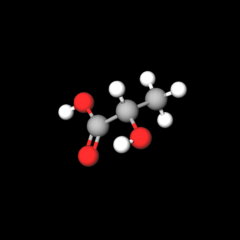
As reducing the environmental impact of plastics becomes a global priority, polylactic acid (PLA)—a bioplastic made from plant-based renewable resources—has been attracting increasing attention.
In this article, we explain the fundamental features and applications of PLA, as well as the reasons behind its growing popularity. We also introduce next-generation PLA technologies designed to overcome the limitations of conventional PLA. If you are considering the adoption of sustainable materials, we hope you will find this guide helpful.
In this article, we explain the fundamental features and applications of PLA, as well as the reasons behind its growing popularity. We also introduce next-generation PLA technologies designed to overcome the limitations of conventional PLA. If you are considering the adoption of sustainable materials, we hope you will find this guide helpful.
Understanding Biodegradable Plastics
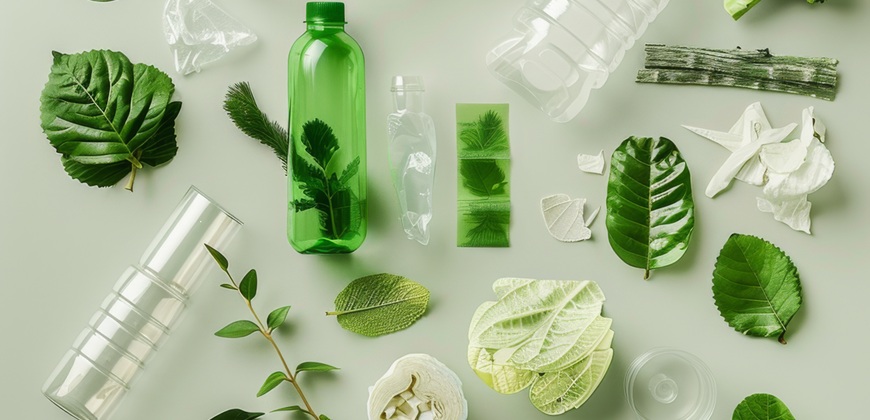
Biodegradable plastics are a general term for plastics that can be broken down by microorganisms into water and carbon dioxide under specific conditions. While they can be used in much the same way as conventional plastics, they decompose after disposal under conditions suitable for each material. As a result, they are attracting attention as sustainable materials that can help reduce the accumulation of plastic waste and mitigate environmental pollution.
A concept that is often confused with biodegradable plastics is biomass plastics. Biomass plastics are made from renewable organic resources such as plants, but they are not necessarily biodegradable. Likewise, biodegradable plastics include both plant-based materials and those derived from fossil resources.
How PLA Differs from Other Biodegradable Plastics
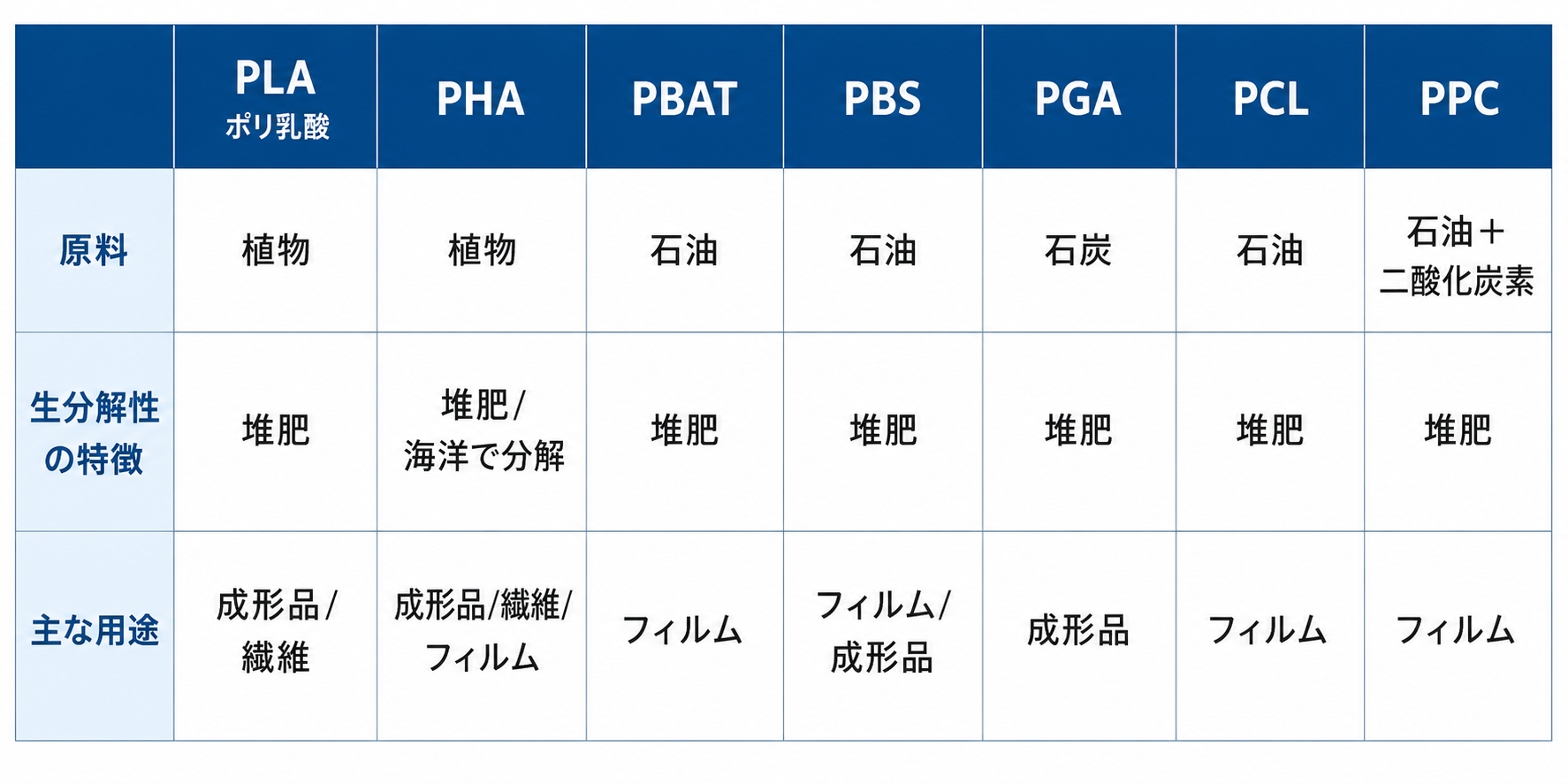
In addition to PLA, there are various types of biodegradable plastics, each with different raw materials, characteristics, and degradation conditions.
Below is an overview of some of the major types.
PHA (Polyhydroxyalkanoates)
PHA is a type of polyester naturally produced and stored by microorganisms. It is biodegradable not only in soil but also in marine environments, making it a promising solution to the growing issue of marine plastic pollution.
PBAT (Polybutylene Adipate Terephthalate)
PBAT is a flexible biodegradable plastic that is well suited for applications such as films and bags. It is typically produced from fossil-based feedstocks, which distinguishes it from PLA, a biomass-based material.
PBS (Polybutylene Succinate)
PBS is a biodegradable plastic that is decomposed by naturally occurring microorganisms in soil. It offers relatively high heat resistance and has been increasingly adopted in applications such as agricultural mulch films.
Main Types of Biodegradable Plastics
Why Polylactic Acid (PLA) Is Gaining Attention
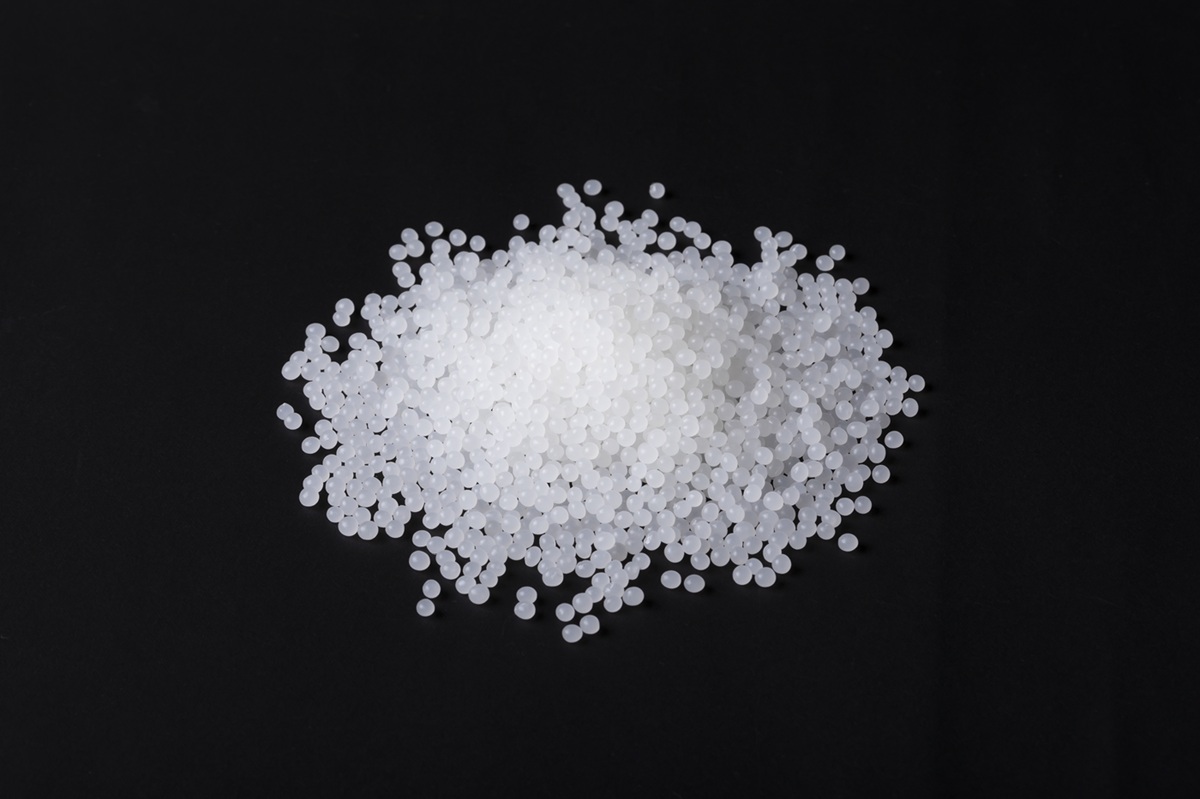
The growing interest in PLA is driven by the global shift toward decarbonization and reducing plastic waste. As marine plastic pollution and microplastic contamination become increasingly serious environmental issues, countries around the world are strengthening regulations on single-use plastics, creating an urgent need for environmentally friendly alternatives to petroleum-based plastics.
At the same time, efforts to achieve carbon neutrality are accelerating, driving greater interest in materials made from renewable resources rather than fossil fuels. Because PLA is produced from plant-based feedstocks, it has the potential to reduce CO2 emissions over a product's entire life cycle, making it an increasingly attractive option for corporate sustainability strategies.
In addition, PLA is one of the more commercially established biodegradable plastics and offers relatively strong cost competitiveness. As a result, it is attracting attention as a practical alternative to conventional petroleum-based plastics.
Key Features and Advantages of Polylactic Acid (PLA)
A Promising Green Material That Is Both Bio-Based and Biodegradable
PLA's greatest advantage is that it is a biomass plastic made from renewable plant-based resources such as corn and sugarcane, while also being biodegradable under appropriate industrial composting conditions, where it decomposes into water and CO2. Few materials combine both bio-based and biodegradable properties, making PLA one of the most promising next-generation green materials.
In addition, PLA offers excellent transparency and moldability, making it a highly versatile material suitable for a wide range of applications, including films, containers, and fibers.
The Most Widely Used Biodegradable Plastic
PLA is the most widely adopted biodegradable plastic currently available. With an annual production capacity of approximately 1.1 million tons—primarily in China (based on publicly available data compiled by HighChem)—it has established the largest market share among biodegradable plastics. In China, PLA is increasingly used in everyday products, including straws and cups at major coffee chains.
As production capacity continues to expand, PLA is becoming increasingly cost-competitive, and its adoption is expected to grow across an even broader range of applications.
Main Applications
Food Packaging & Apparel Packaging
Disposable Containers & Cutlery
Eco-Friendly Products & Sustainable Brands
3D Printing
Agricultural Materials
Medical Materials
Challenges of Polylactic Acid (PLA)
The primary challenges associated with PLA are its heat resistance and impact resistance. Because PLA has a relatively simple chemical structure, it is less heat-resistant than conventional petroleum-based plastics and tends to deform under high-temperature conditions. It also has limited impact resistance, making it more susceptible to cracking in certain applications.
Another challenge is that PLA requires the high-temperature and high-humidity conditions of an industrial composting facility to biodegrade efficiently. It does not readily decompose in natural environments or home composting systems. To address these limitations, a variety of next-generation PLA technologies are currently being developed.
Next-Generation PLA Technologies Developed by HighChem
At HighChem, we are developing next-generation PLA technologies to overcome these challenges.
Stereo Complex PLA (SC-PLA)
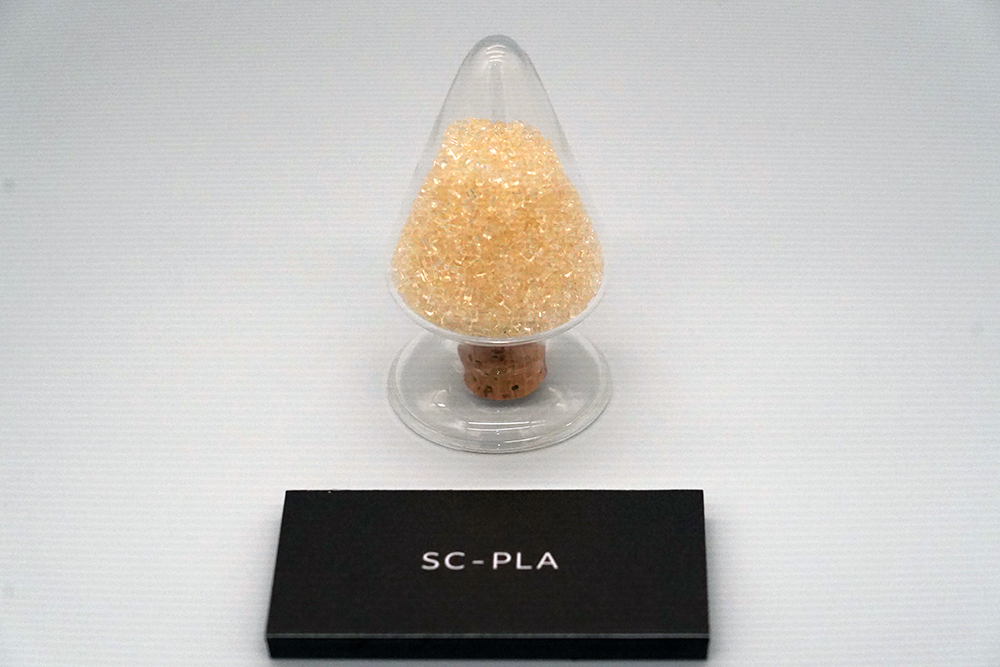
SC-PLA is a type of PLA with a unique crystalline structure produced from highly purified L-lactic acid and D-lactic acid. While conventional PLA has a melting point of approximately 170°C, SC-PLA has a melting point exceeding 210°C, providing significantly improved heat resistance and durability. HighChem has acquired the intellectual property rights for SC-PLA from Ricoh Company, Ltd. and successfully established the fundamental manufacturing technology. In addition to fiber applications, we are expanding its use into a wide range of heat-resistant applications, including films, electrical and electronic devices, automotive components, and 3D printing filaments.
High Molecular Weight PLA

High-molecular-weight PLA is designed with a weight-average molecular weight exceeding 300,000, offering greater strength and durability than conventional PLA. HighChem has acquired the intellectual property rights related to the technology and expertise for high-molecular-weight PLA produced using supercritical carbon dioxide, originally developed by Ricoh Company, Ltd., and is advancing development toward commercial-scale production.
A key advantage of this technology is that it enhances the mechanical properties of PLA without the need for additives or petroleum-based resins, allowing its environmental benefits to be preserved while improving performance. Looking ahead, HighChem also plans to expand its licensing activities into global markets, including China.
Next-Generation PLA Material: HIGHLACT®

HIGHLACT® is HighChem's next-generation PLA material, introduced in 2021. Developed with enhanced dyeability and heat resistance, it is being applied to a wide range of textile products.
HighChem's PLA Solutions

Building on its strategic partnership with BBCA Group, China's largest PLA manufacturer, HighChem provides comprehensive biodegradable plastic solutions.
In addition to PLA, we offer a portfolio of seven biodegradable plastics, including PBAT (polybutylene adipate terephthalate) and PHA (polyhydroxyalkanoates), enabling us to recommend the most suitable material based on specific applications and required performance characteristics.
From the development of next-generation technologies such as SC-PLA and high-molecular-weight PLA to the expansion of textile applications through HIGHLACT®, HighChem supports customers at every stage—from raw material supply to product commercialization—to help accelerate their sustainability initiatives.
Looking for Environmentally Friendly Packaging Materials and Solutions?
In this article, we explored the characteristics, applications, and challenges of polylactic acid (PLA), as well as the next-generation PLA technologies being developed by HighChem. As a bio-based and biodegradable green material, PLA is expected to see even broader adoption in the years ahead.
In addition to next-generation technologies such as SC-PLA and high-molecular-weight PLA, HighChem offers a portfolio of seven biodegradable plastics. If you are considering environmentally friendly materials for your products, please feel free to contact HighChem.
Note: The environmental impact of PLA varies depending on factors such as raw material sourcing, manufacturing, transportation, and end-of-life treatment. In addition, effective biodegradation requires appropriate conditions, such as those provided by industrial composting facilities.
Related Products
A representative type of biodegradable resin, supplied by China’s largest producer, BBCA, through its authorized distributor. Stocked and sold in Japan.