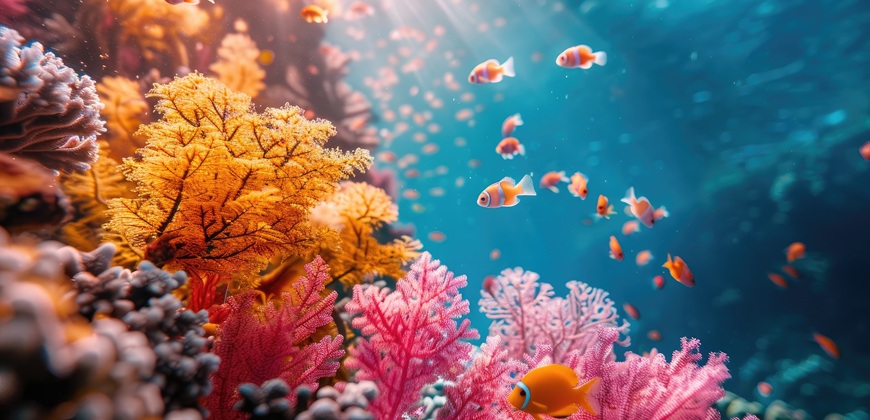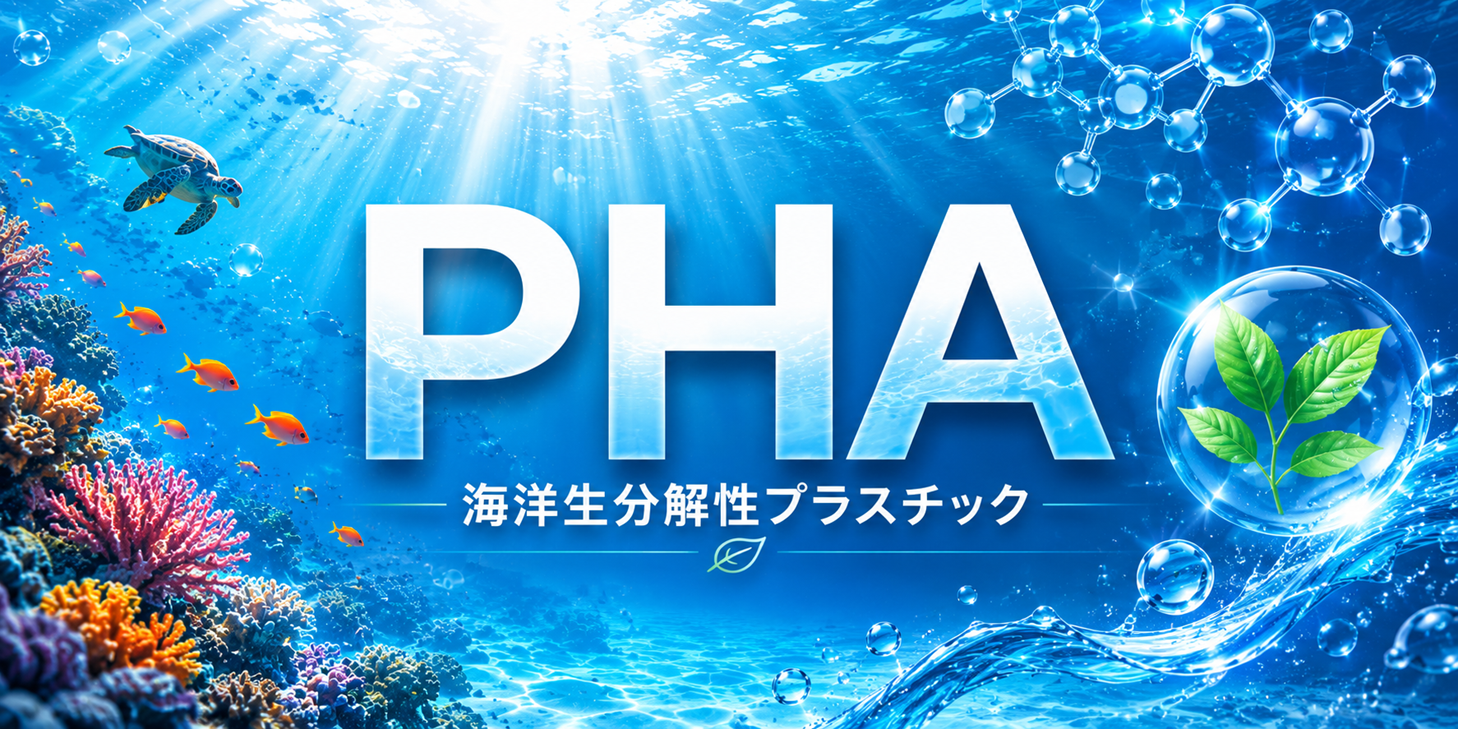
Among them, one material that has gained significant attention in recent years is the marine-biodegradable plastic “PHA (Polyhydroxyalkanoate),” which can decompose even in marine environments.
PHA has the unique characteristic of ultimately being broken down by microorganisms into water and CO2 in seawater, soil, and freshwater environments, and is increasingly being utilized in a wide range of applications, including packaging materials, cosmetics, textiles, and food containers.
In this article, we provide an easy-to-understand overview of the fundamentals of biodegradable plastics, the differences between PHA and PLA, the characteristics and types of PHA, its major applications and adoption cases, and HighChem’s initiatives in this field.
If you are looking to take your product’s environmental performance to the next level, we hope you will find this article useful.
Basics of Biodegradable Plastics
Biodegradable plastics are plastics that can be used in the same way as conventional plastics during use and, after disposal, are decomposed by naturally occurring microorganisms into water and CO2, ultimately returning to nature.
Many petroleum-based plastics developed to date are said to take 100 to 1,000 years to decompose, causing various environmental issues such as marine plastic pollution. In contrast, biodegradable plastics can return to soil and water under appropriate environmental conditions without remaining in nature as waste. For this reason, they are increasingly being adopted for products that are likely to become microplastics and are difficult to recover once released into the environment, as well as for disposable containers and packaging materials.
Types of Biodegradable Plastics
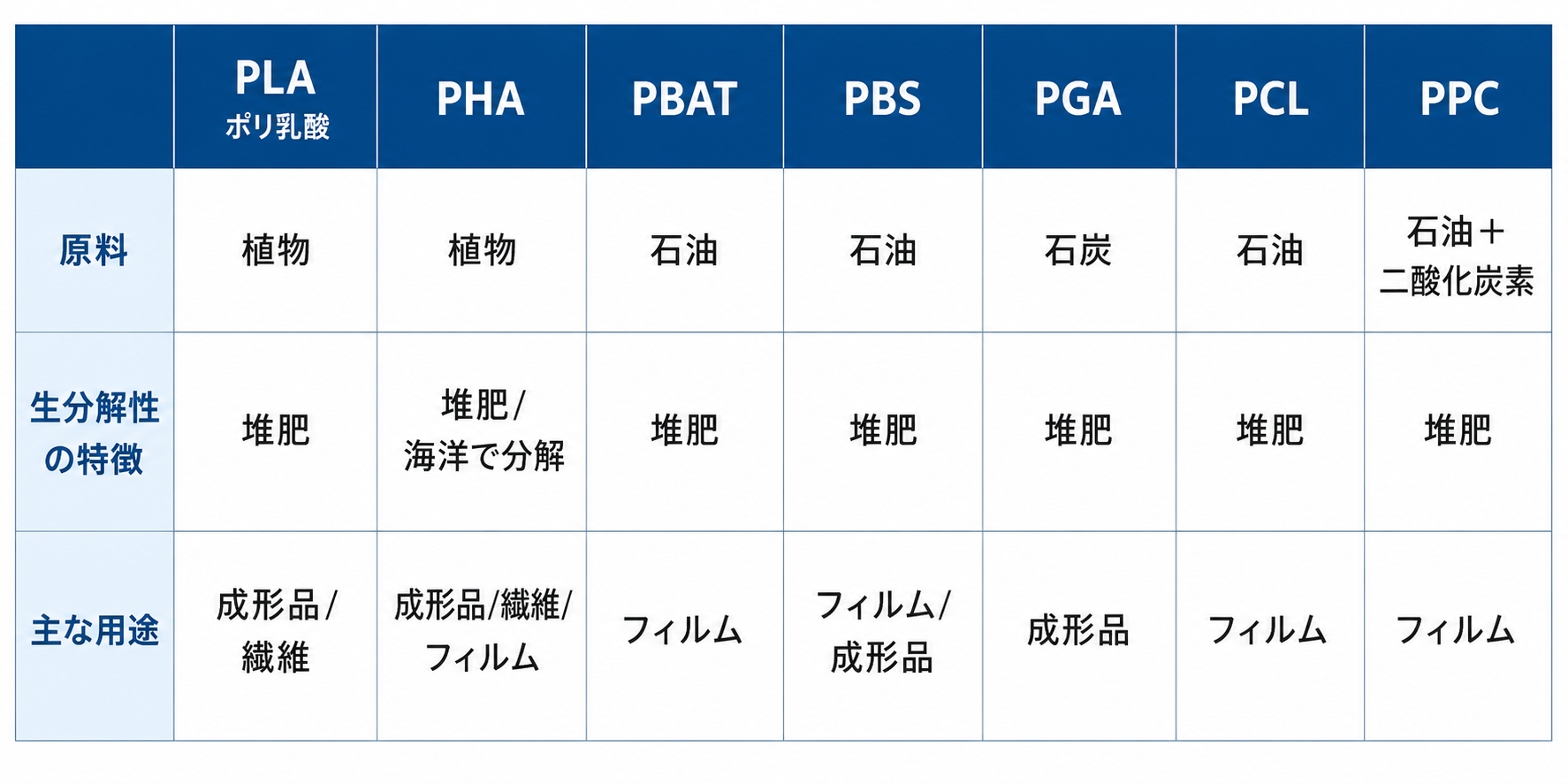
Like conventional plastics, biodegradable plastics are available in a variety of types. Each type has its own primary raw materials and biodegradation characteristics, making it important to select the appropriate resin according to the required functional and environmental performance.
Major Types of Biodegradable Plastics
Differences Between PHA and PLA
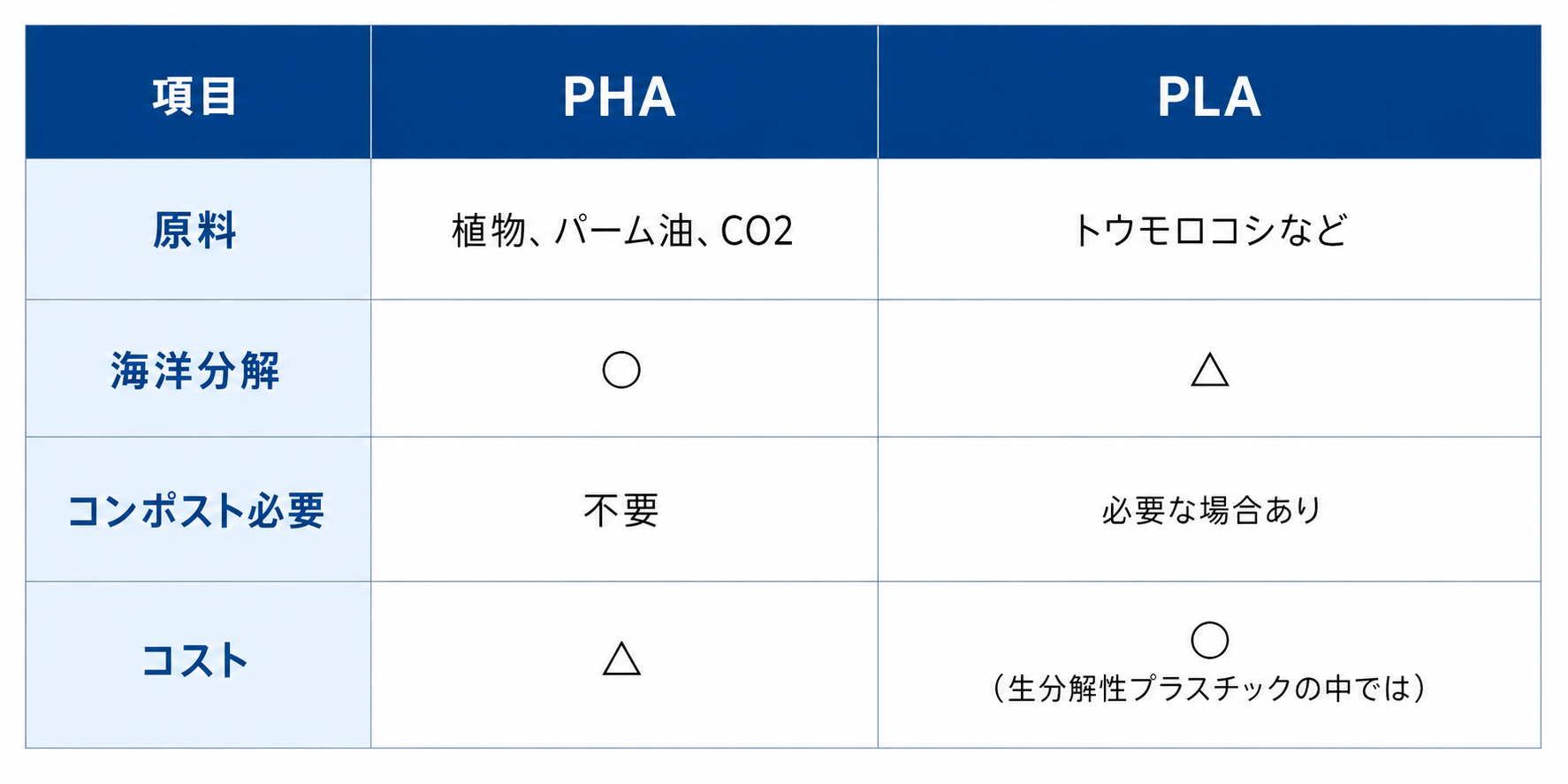
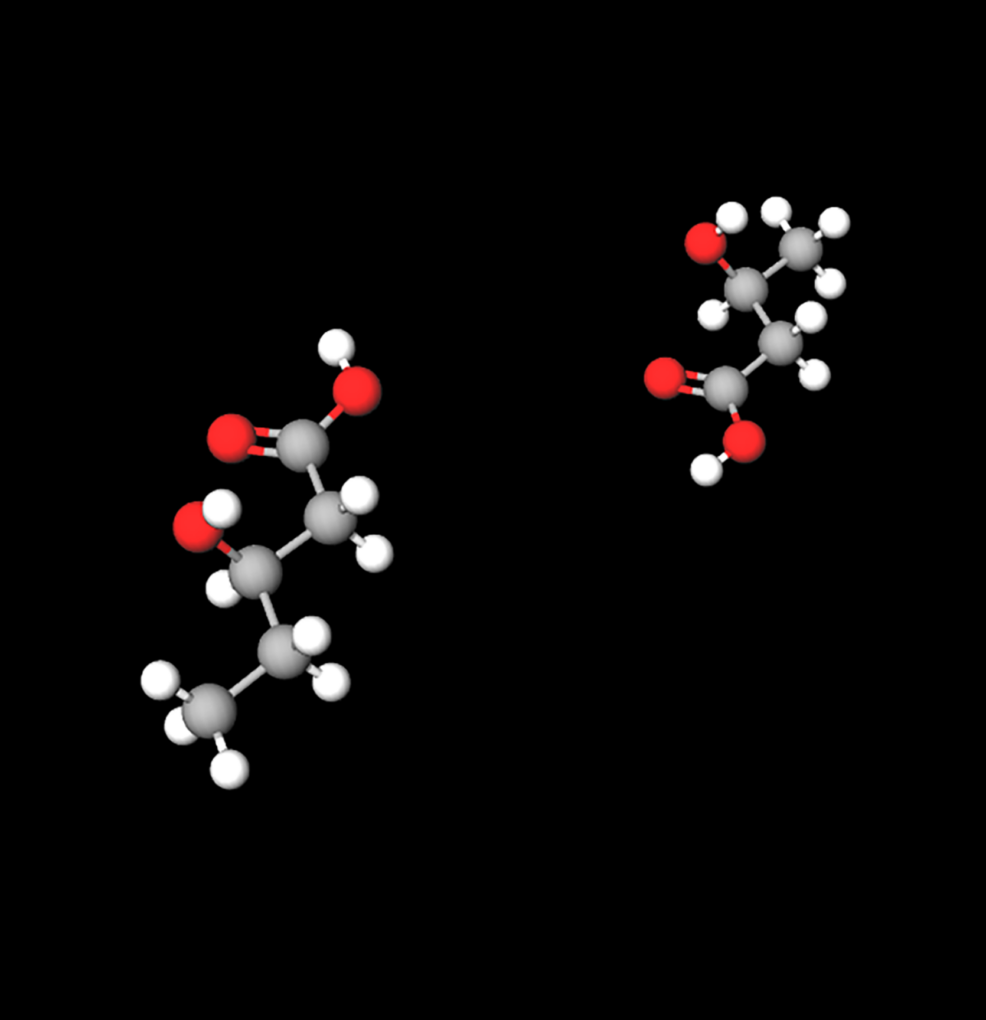
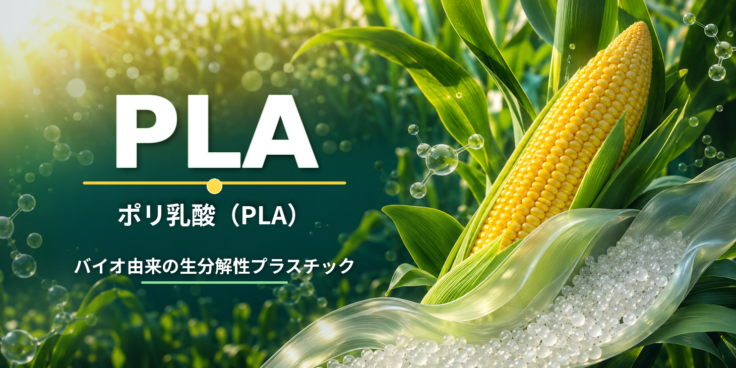
Among biodegradable plastics, PLA (Polylactic Acid) is currently the most widely mass-produced and globally adopted material. PLA is attracting attention as a bioplastic produced from plant-based raw materials such as corn and sugarcane.
However, PLA often requires specific composting conditions for biodegradation and may decompose slowly in natural environments.
In contrast, PHA is also a bioplastic made from plant-derived feedstocks and other renewable resources, but it offers excellent biodegradability and can be decomposed by microorganisms in a variety of natural environments, including seawater, freshwater, and soil.
While PHA offers superior environmental performance compared with PLA, particularly in terms of marine biodegradability, its production cost remains higher than that of PLA at present. Worldwide efforts are currently underway to reduce costs through advancements in mass-production and fermentation technologies.
Features and Benefits of Marine-Biodegradable Plastic PHA
The key advantages of PHA can be summarized in three areas: marine biodegradability, excellent safety, and diverse material properties.
High Biodegradability, Even in Marine Environments
The greatest characteristic of PHA is its high biodegradability, even in marine environments. It is decomposed into water and CO2 by microorganisms in seawater, freshwater, and soil.
Another notable feature of PHA is that it does not require industrial composting facilities to biodegrade and can decompose naturally in the environment. As a result, it is attracting attention for applications such as packaging materials and textile products that may potentially enter marine environments.
In recent years, regulations on microplastic beads used in cosmetics and other products have become increasingly stringent, particularly in Europe, leading to growing interest in replacing them with marine-biodegradable materials such as PHA.
Excellent Safety: Suitable for Food Packaging Applications
Like PLA, PHA offers high biocompatibility and is increasingly being used in medical and food-packaging applications.
In addition, “P3HB4HB,” whose use in certain food applications had previously been limited, was added to Japan’s Positive List for Food Utensils, Containers, and Packaging Materials in March 2026, making it officially approved for food-packaging applications in Japan.
As such, PHA is attracting growing interest not only for its environmental performance but also for its safety.
Diverse Material Properties: Suitable for Various Packaging Applications
PHA is available in various forms, including homopolymers and copolymers, and its material properties can be tailored by adjusting monomer composition and blending ratios.
As a result, it can be applied to a wide range of packaging materials and products, from flexible film applications to molded products requiring rigidity and heat resistance.
Because its properties can be customized according to application requirements, PHA is increasingly being developed and adopted for packaging materials, textiles, food containers, and daily consumer products.
Types, Major Applications, and Use Fields of
Marine-Biodegradable Plastic PHA
PHA is available in various forms depending on differences in monomer composition and blending ratios. Since each type exhibits distinct properties and characteristics, selecting the appropriate material for the intended application is important.
Here, we will introduce the characteristics, applications, and fields of use of PHAs, primarily those handled by HighChem.
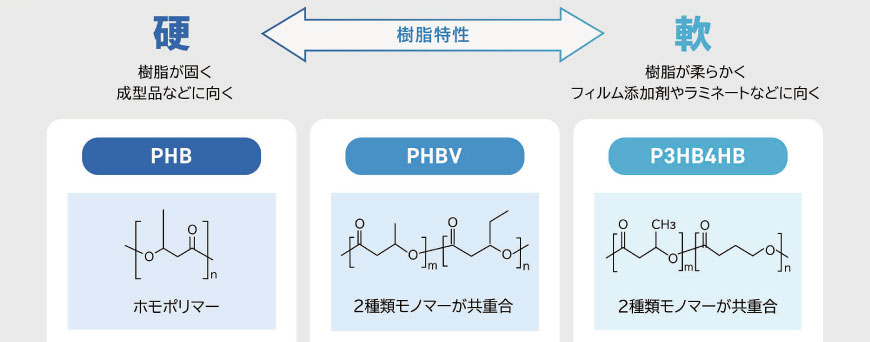
PHB
PHB is characterized by its high rigidity and excellent heat resistance among PHA materials.
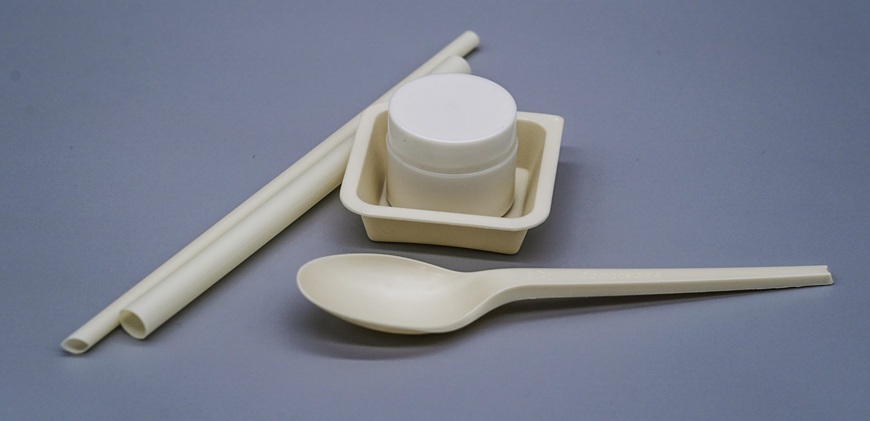
Because of its high stiffness, it is well suited for injection-molded products such as disposable tableware and cutlery, and its use is expanding primarily in molded product applications.
In addition, its relatively high crystallinity makes it a promising material for applications requiring heat resistance.
PHBV
PHBV is a type of PHA produced through the copolymerization of two monomers. By adjusting the monomer ratio, it is possible to achieve a wide range of material properties, from rigid to flexible.
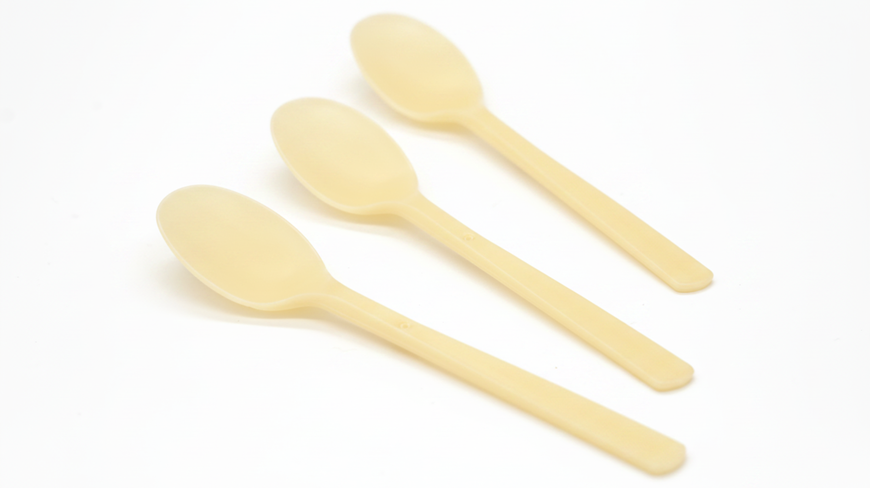
Leveraging this characteristic, PHBV is being developed for products that require both rigidity and flexibility, such as toothbrush handles and disposable spoons.
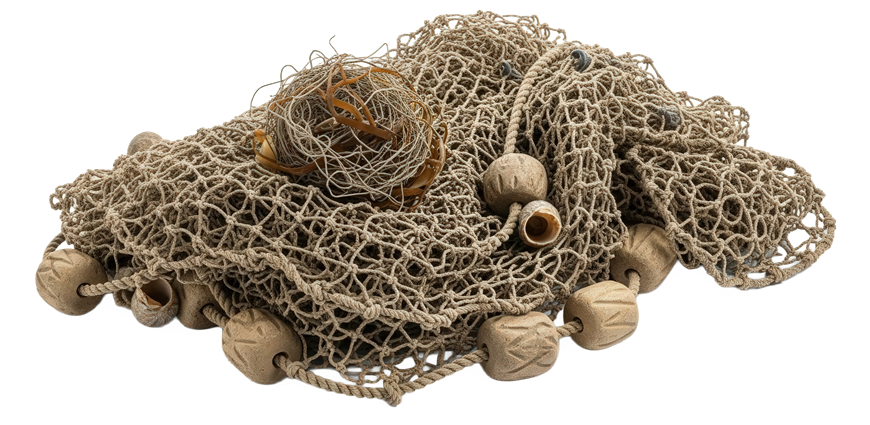
In addition, applications in textiles that take advantage of its flexibility are also expanding, and in recent years, its use in products such as fishing nets has been explored as a solution to marine debris issues.
As such, PHBV is attracting attention as a material that combines environmental performance with functionality.
P3HB4HB
P3HB4HB is characterized by its excellent flexibility and is a type of PHA suitable for film and laminate applications.
In addition to being used on its own, it is also expected to serve as a softening modifier for improving the flexibility of other resins.
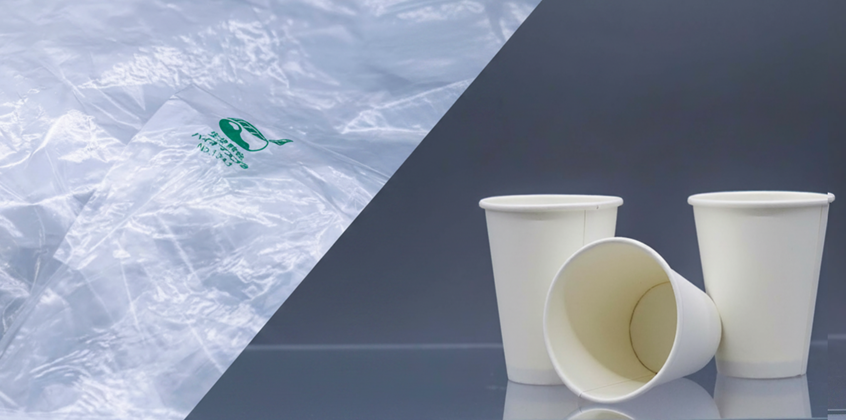
HighChem has jointly developed a “PLA inflation film” by blending P3HB4HB and PLA in collaboration with a packaging materials trading company. The product is marketed as a biodegradable plastic film and has been adopted as suit covers for luxury brands in Europe.
Furthermore, in collaboration with manufacturers, HighChem has also developed laminate materials for the inner lining of paper cups. By combining these materials with paper and other substrates, marine-biodegradable paper cups can be realized.
Recommended Applications and Industries for PHA
As a next-generation bioplastic with marine biodegradability, PHA is expected to find applications across a wide range of fields, from packaging materials and consumer goods to cosmetics and marine-related products.
Here are some of the key applications and industries where the adoption of PHA is expected.
Environmentally Friendly Packaging Materials (Food Packaging, Apparel Packaging, etc.)
PHA can be processed using a wide range of methods, from film production to injection molding, making it highly promising as an environmentally friendly packaging material.
In addition, because it can biodegrade in natural environments, even if it is accidentally released into the environment, it can be decomposed by microorganisms.
For this reason, it is expected to be widely used in disposable applications such as food packaging, apparel packaging, shopping bags, and cushioning materials.
Disposable Containers and Cutlery
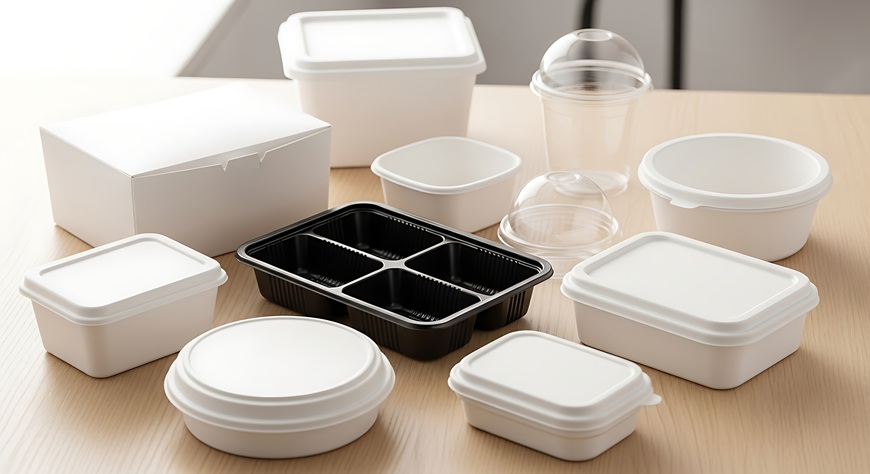
PHA is increasingly being adopted in disposable container applications, including paper cup laminates, paper trays, straws, and cutlery.
In China, its use is expanding in applications such as laminates for paper cups used on aircraft, cutlery, paper trays, snack packaging materials, and straws.
In Japan as well, an increasing number of companies are switching to environmentally friendly packaging, including the adoption of PHA materials in Starbucks straws.
Products with a Risk of Marine Leakage
Products used in marine environments carry the risk of being released into the ocean after use.
As a result, there is growing interest in PHA with marine biodegradability for applications such as fishing nets, fishing lines, and lures, where the risk of marine leakage is high.
PHA is also being explored for environmentally friendly fishing equipment and fisheries-related materials as a solution to marine litter issues.
Cosmetics
In Europe, REACH regulations were strengthened in September 2023, and stricter regulations on microplastics are being introduced in stages.
In the cosmetics sector, restrictions on the use of microplastics in cosmetic products sold within the EU are being expanded, and by 2035, the incorporation of microplastics into all makeup products, including lip and nail products, is expected to be prohibited.
Against this backdrop, PHA with marine biodegradability is attracting attention as an alternative material for cosmetic microbeads.
Environmentally Conscious Brands
When garments made from synthetic fibers are washed, fine microfibers are released into wastewater and eventually enter the ocean, which has become a growing environmental concern.
By utilizing PHA as a textile material, microplastics released from clothing may also be capable of biodegrading in natural environments.
As a result, interest in PHA fibers has been growing among sustainability-focused brands and apparel companies in recent years.
HighChem’s Initiatives in the PHA Field
Leveraging the chemical industry network it has built in China, HighChem has established a stable supply system for environmentally friendly materials through distribution agreements with leading Chinese biodegradable material manufacturers. The company is promoting the adoption of biodegradable materials in the Japanese market by building a supply chain that connects Japan and China.
In addition to supplying materials, HighChem is actively working toward the social implementation of PHA materials through application-specific material proposals, processing and compounding support for the Japanese market, and joint development of new applications.
Distribution Agreement Signed with the
World’s Largest PHA Manufacturer, PhaBuilder
Since July 2024, HighChem has entered into a distribution agreement with PhaBuilder, one of the world’s largest PHA manufacturers, and has been introducing the company’s innovative PHA product lineup to the Japanese market.
Drawing on more than 30 years of accumulated expertise from Tsinghua University, PhaBuilder began operating one of the world’s largest PHA plants in Hubei Province in 2024, with an annual production capacity of 10,000 tons. Further expansion to 30,000 tons per year is also planned.
Through its partnership with PhaBuilder, HighChem provides high-quality PHA materials with a stable supply capability to the Japanese market.
Joint Development of PHA-Based Cosmetic Microbead Alternatives
with Japanese and Chinese Companies
Microplastic beads used in cosmetics are discharged into the ocean through wastewater and have become one of the causes of marine pollution. In recent years, regulations have become increasingly stringent, particularly in Europe.
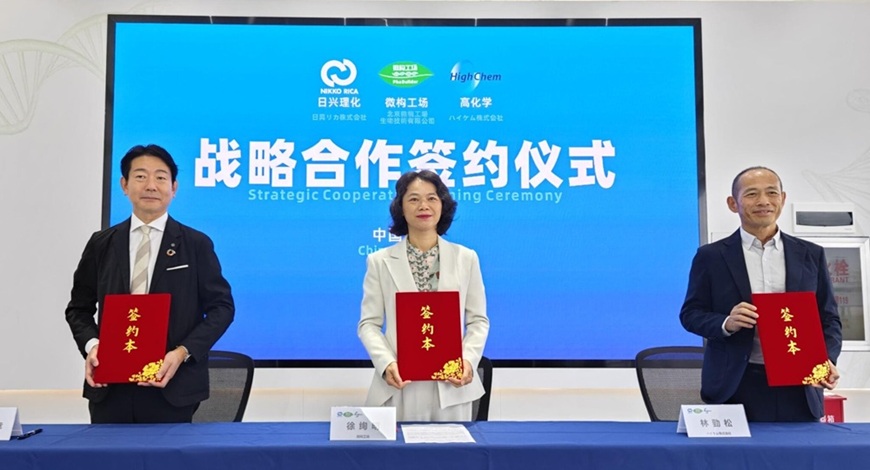
In response to this trend, HighChem entered into a strategic partnership agreement with PhaBuilder, a Chinese PHA manufacturer, and NIKKO RICA Corporation, a Japanese company with proprietary powder processing technology.
The companies are currently engaged in the joint development and market expansion of PHA-based alternatives to cosmetic microbeads, aiming for commercialization as environmentally friendly cosmetic materials.
Looking for Environmentally Friendly Packaging Materials and Solutions?
If you are looking for environmentally friendly packaging materials and solutions, please contact HighChem Company Limited, a leading company in Japan–China fine chemical trading.
HighChem has been at the forefront of developing the biodegradable materials market, including signing a strategic business partnership agreement with Anhui BBCA Group Co., Ltd., China’s largest PLA manufacturer. In addition to PLA, the company has established a supply system for a total of seven biodegradable materials, including polybutylene adipate terephthalate (PBAT) and PHA, enabling it to provide optimal solutions tailored to customer needs.
HighChem can also provide technical support as your development partner, including processing and compounding support for the Japanese market.
If you are considering the introduction of biodegradable plastics, exploring alternatives to PLA, preparing for EU regulatory compliance, making your packaging more environmentally friendly, evaluating the processability of PHA, or would simply like to learn more about marine-biodegradable plastic PHA, please feel free to contact us.
Related Products
Marine biodegradable, made from 100% plant-derived materials. Available in both powder and pellet types.
-736x360.png)