Unlocking Carbon Neutrality and Green Business
by Harnessing the Ocean—Home to 130 Times More CO2 Than the Atmosphere
Against this backdrop, attention is turning to the ocean—the source of life itself. Covering 71% of the Earth's surface, the ocean is estimated to contain approximately 130 times more dissolved CO2 than the atmosphere. Recognizing this enormous potential, Beijing-based Carbon Energy, HighChem's joint venture partner, has successfully developed an innovative technology called eDOC (electrochemical Direct Ocean Capture), which directly captures CO2 from seawater.
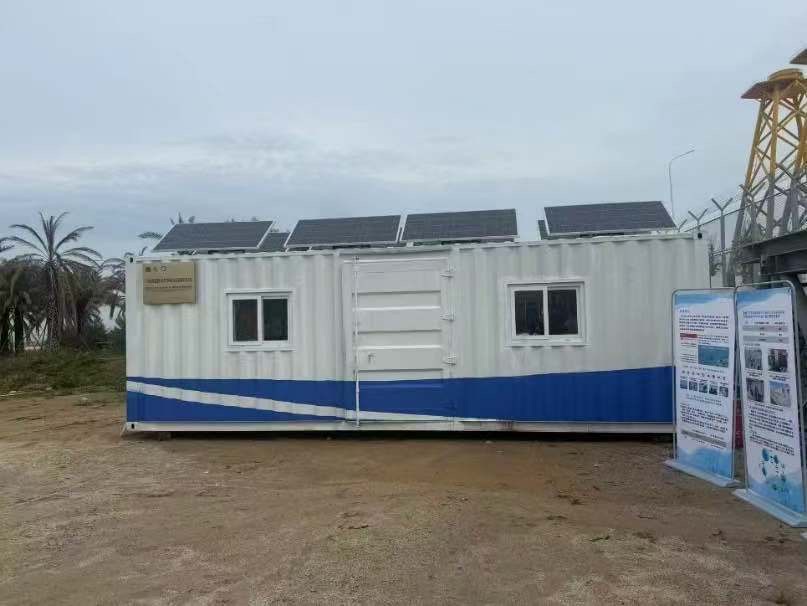
Demonstration of eDOC (Electrochemical Direct Ocean Capture) Conducted in Guangdong Province, China

Demonstration test conducted in Guangdong Province in August 2025
In August 2025, an offshore demonstration of the eDOC (Electrochemical Direct Ocean Capture) system, jointly developed by Carbon Energy and Guangdong Datang International Chaozhou Power Generation Co., Ltd., was successfully conducted in Guangdong Province, China.

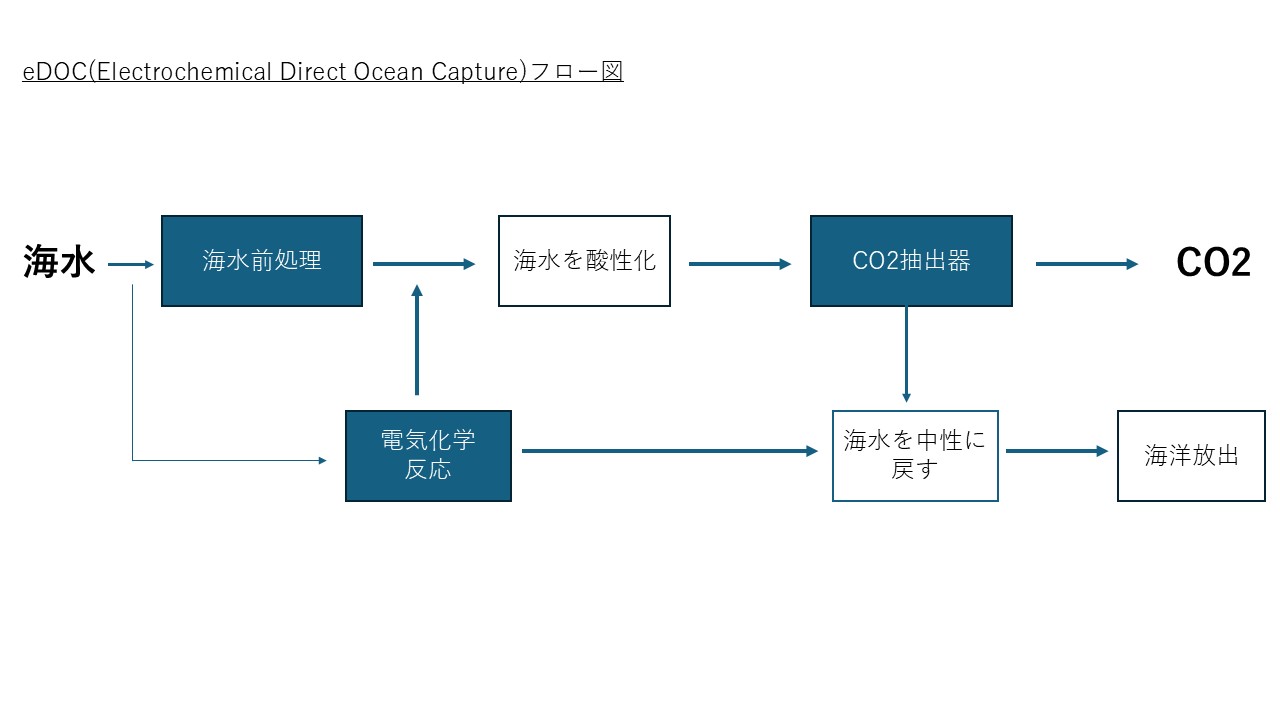
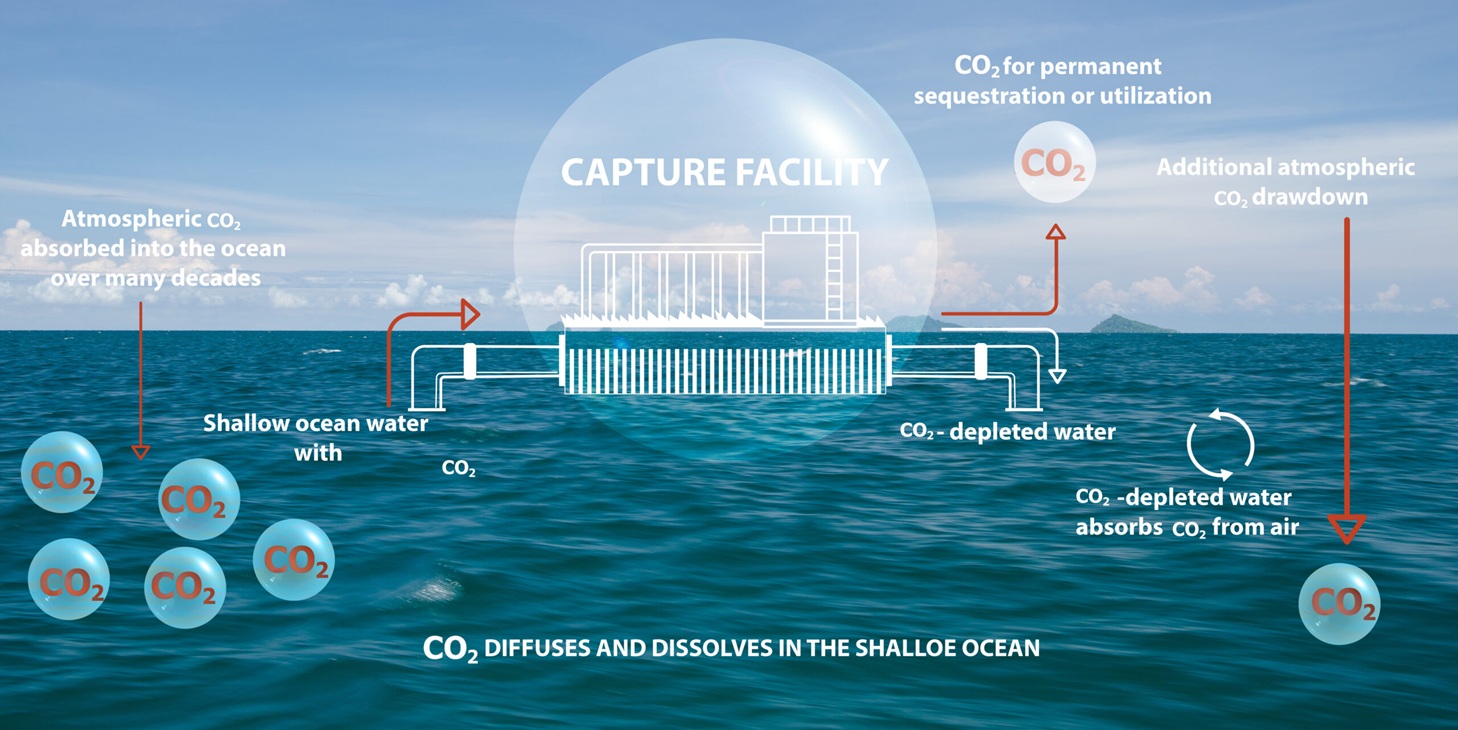
eDOC is a technology that electrochemically acidifies pumped seawater, releasing the dissolved CO2 it contains. A gas separation membrane is then used to recover high-purity CO2. After the CO2 is extracted, the seawater is restored to its original mildly alkaline state, enabling it to absorb atmospheric CO2 once again. By continuously repeating this process, atmospheric CO2 levels can be gradually reduced, ultimately contributing to carbon neutrality.
Carbon Energy possesses proprietary high-performance membrane and reactor technologies for this system, providing the company with a strong competitive advantage.
"The process is simple, operating conditions are mild, system performance is stable, and all design requirements have been fully achieved." With these comments, the expert evaluation panel of the China Petroleum and Chemical Industry Federation highly praised the demonstration results. This breakthrough marks another major step forward, advancing Carbon Energy's eDOC technology from laboratory research toward commercial deployment.
DOC (Direct Ocean Capture): High-Efficiency, Environmentally Friendly Technology with Strong Cost-Reduction Potential
Conventional DAC technology is estimated to cost between US$600 and US$1,000 to capture one ton of CO2. In contrast, global developers of eDOC technology are targeting costs of around US$100 per ton. Carbon Energy aims to go even further, leveraging its proprietary membrane technology to reduce costs to an ambitious US$60–80 per ton.
"Large quantities of CO2 are dissolved in seawater, where concentrations are approximately 130 times higher than in the atmosphere. As a result, capturing CO2 from the ocean offers a far greater cost advantage," said Kang Peng, CEO of Carbon Energy.
Ocean-Based Carbon Capture: DOC (Direct Ocean Capture) |
Air-Based Carbon Capture: DAC (Direct Air Capture) |
|---|---|
Advantages:
|
Advantages:
|
Disadvantages:
|
Disadvantages:
|
In terms of energy efficiency, eDOC can reduce energy consumption by 30–50% compared with conventional DAC technology. It can also directly utilize renewable energy sources such as offshore wind power. Additional advantages include freedom from land-use constraints and the effective use of surplus daytime electricity.
Although the technology is still in the global demonstration phase, commercialization efforts are accelerating worldwide, particularly in the United States. California-based Captura began constructing a demonstration plant in Hawaii with an annual CO2 capture capacity of 1,000 tons in February 2025, signaling steady progress toward large-scale commercial deployment.
HighChem's Vision for a Green Ocean Economy

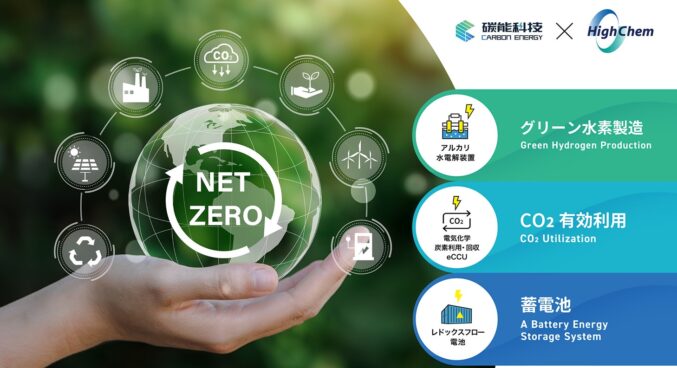
To bring this innovative technology to Japan and the global market, HighChem established HighEnergy Co., Ltd., a joint venture with Carbon Energy.
HighEnergy aims not only to capture CO2, but also to use the recovered CO2 as a feedstock for chemical production, produce hydrogen from seawater, and integrate renewable energy sources such as offshore wind power, ultimately building a fully green chemical manufacturing system.
"By capturing CO2 from seawater and using it as a feedstock for chemical production, we can create a future where environmental sustainability and business growth go hand in hand."
Once fully implemented, this initiative has the potential to overturn the conventional belief that environmental protection is merely a cost burden, paving the way for a new business model in which environmental improvement itself generates economic value.
The Japanese government has declared its commitment to achieving carbon neutrality by 2050, and companies across the country are accelerating their ESG initiatives.
For Japanese businesses, eDOC technology represents a once-in-a-generation opportunity.
・ As a new source of raw materials for chemical and materials manufacturers,
・ As a cornerstone of next-generation businesses for energy companies,
・
And as a high-growth investment opportunity for investors.
Surrounded by the sea on all sides, Japan is uniquely positioned to maximize the potential of this ocean-based decarbonization technology.
Companies interested in participating in, adopting, or investing in eDOC technology are invited to contact HighChem. We provide technical briefings, business planning support, partnership consultations, and tailored assistance to meet your specific needs.
eDOC, represented by HighEnergy, was featured on BS TV Tokyo's "Sustaina MIRAI."
You can watch the program below!