Issue 3: "Growth Bridge" – HighChem's Future and the Challenge for the Next Generation
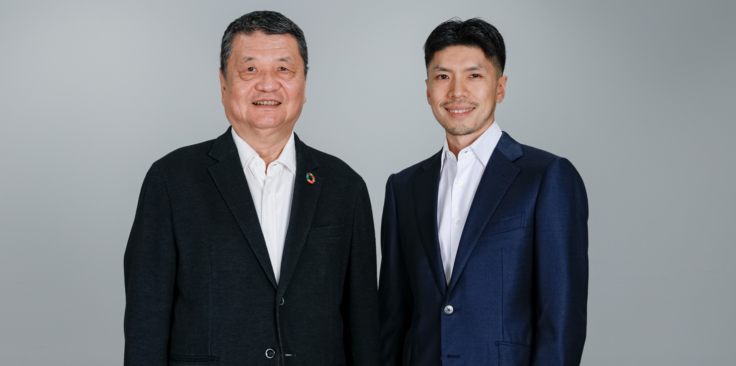
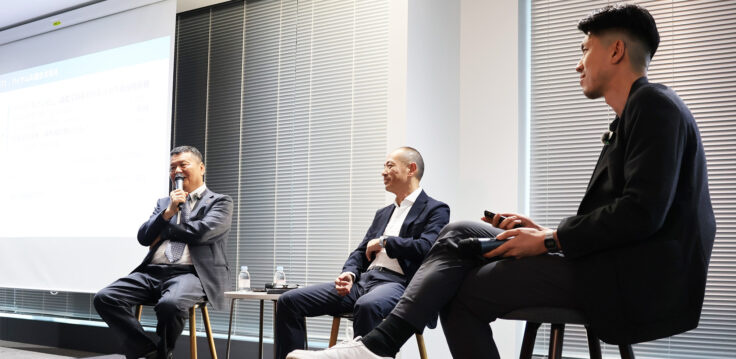
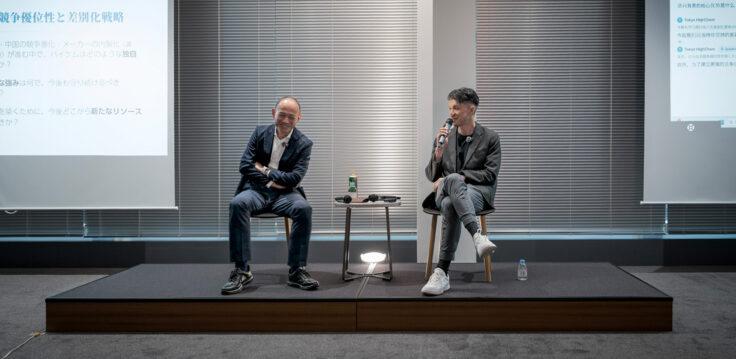
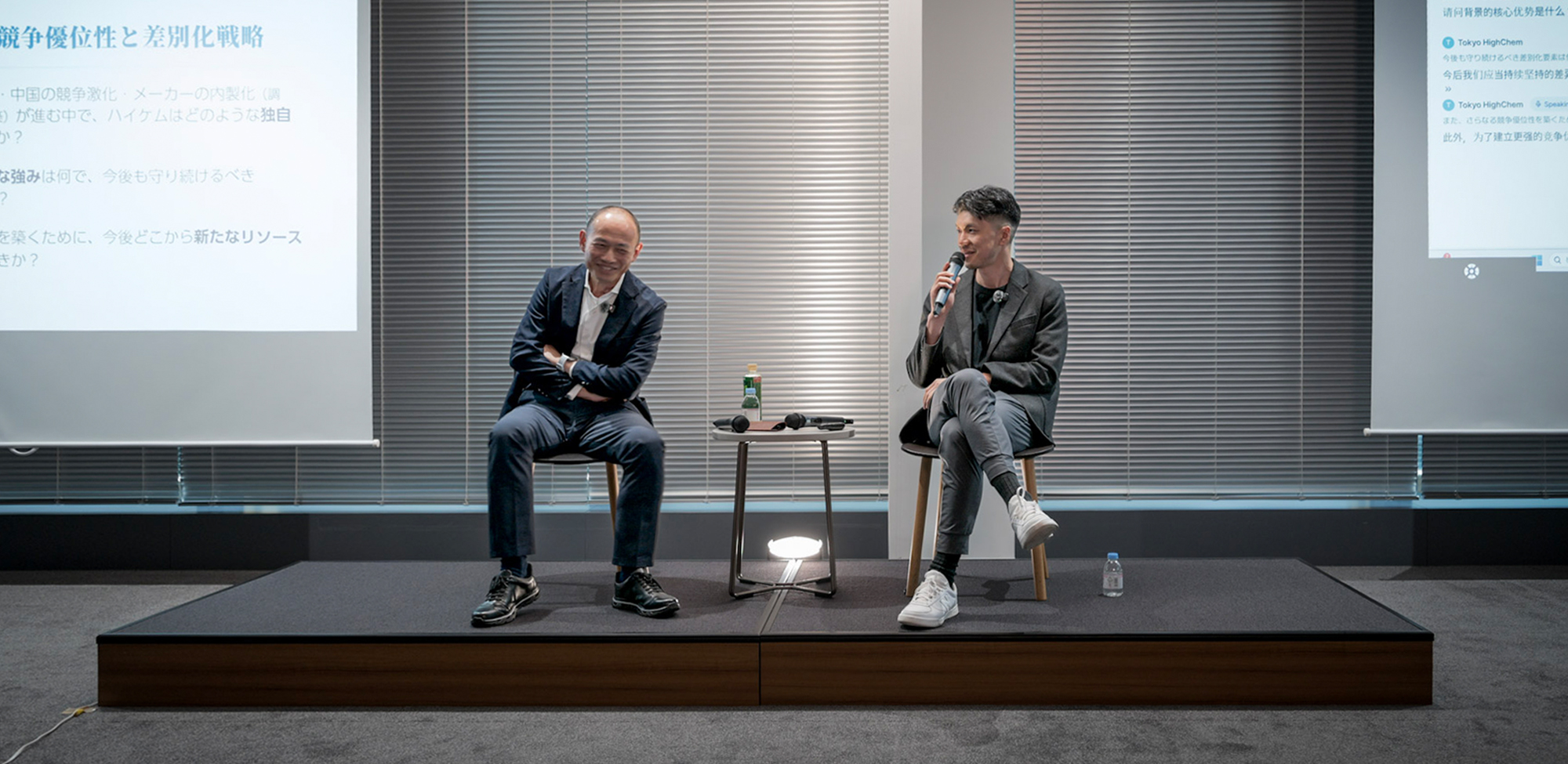
"BRIDGE TO THE FUTURE" is a feature series presented as part of the "HighChem Story" series. For the third installment, titled "Growth Bridge," a roundtable discussion featuring the Chairman, President, and Vice President was held at HighChem's Tokyo Headquarters.
In this second part, we share highlights from Part 2: "Discovering HighChem's Future — A Dialogue Between Top Management."
In the dialogue between the President and Vice President, they shared their candid thoughts on the challenges of achieving the ¥1 trillion milestone, HighChem’s unique competitive strengths as a company combining both trading company and manufacturing capabilities, as well as talent development in the AI era and global strategies for the future. We hope you enjoy reading it.
In this second part, we share highlights from Part 2: "Discovering HighChem's Future — A Dialogue Between Top Management."
In the dialogue between the President and Vice President, they shared their candid thoughts on the challenges of achieving the ¥1 trillion milestone, HighChem’s unique competitive strengths as a company combining both trading company and manufacturing capabilities, as well as talent development in the AI era and global strategies for the future. We hope you enjoy reading it.
What Is the Bottleneck to Achieving ¥1 Trillion in Revenue?
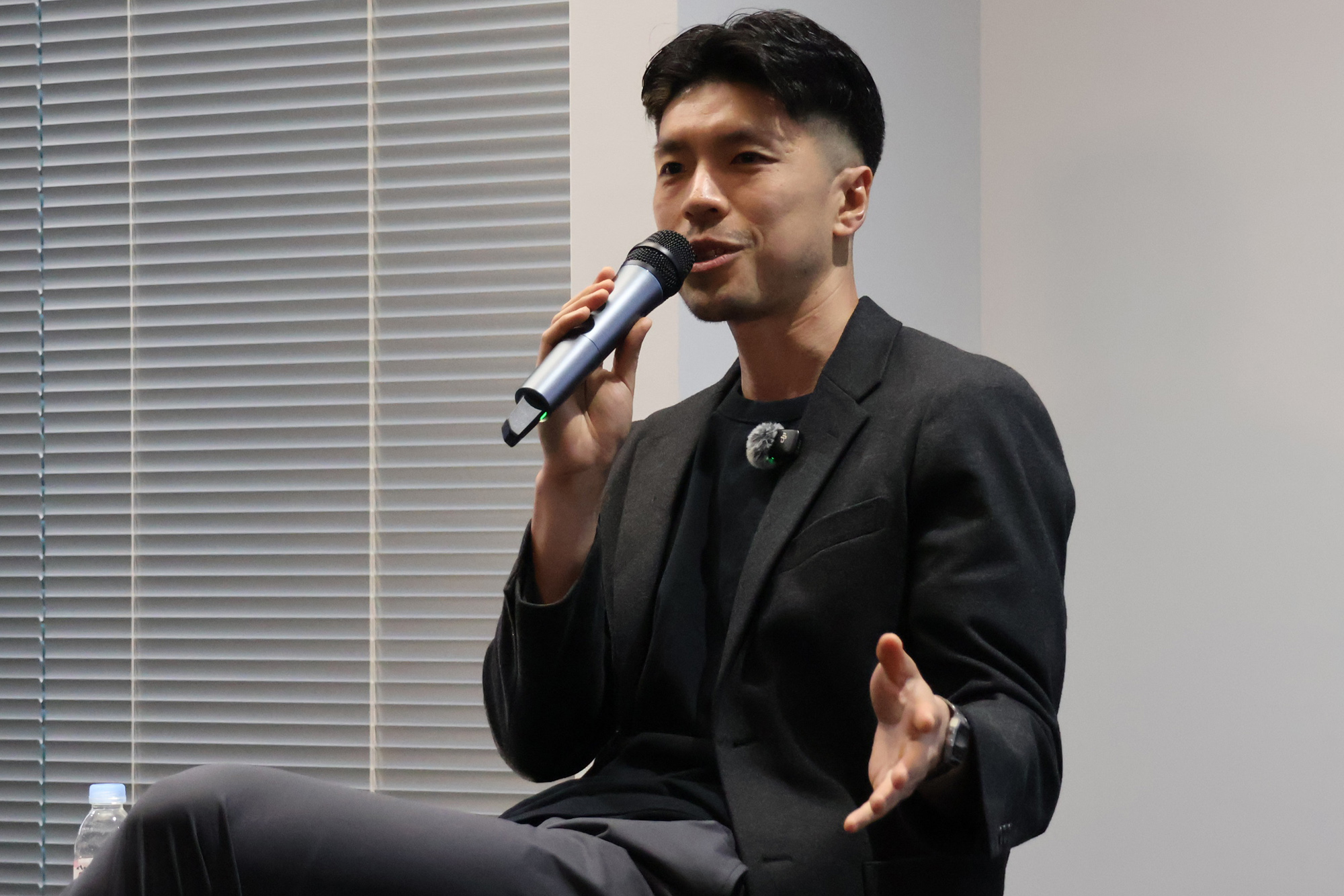
(President) When it comes to what the “bottleneck” is, I believe HighChem has grown through a style that, for better or worse, is similar to that of a “personal business.” Highly motivated individuals have continuously seized opportunities and turned each business into reality one by one. That is how we have grown. In that sense, our origins are very much rooted in the mindset of a trading company—we have focused strongly on how to capture the profits and opportunities right in front of us. Along the way, we added manufacturing capabilities, enabling us to provide new value.
That is why I believe that, for HighChem today, we will not be able to continue delivering value to society unless we continue pursuing both approaches.
However, the ways of thinking in “manufacturing” and “trading” are fundamentally different. And what I have recently come to realize is that we need to further deepen our mutual understanding of these different perspectives.
(Vice President) I do not really think in terms of a “bottleneck.” Rather than asking what is preventing us from achieving the goal, I think about how we can achieve it—by identifying what we currently lack, improving those areas, and taking on new initiatives.
When it comes to the ¥1 trillion goal, I believe the first step is to build several businesses that can consistently generate strong profits. Then, we need to reinvest the profits generated from those businesses to further expand them. I believe that is the only way forward.
Competitive Advantages and Differentiation Strategies as a Trading Company
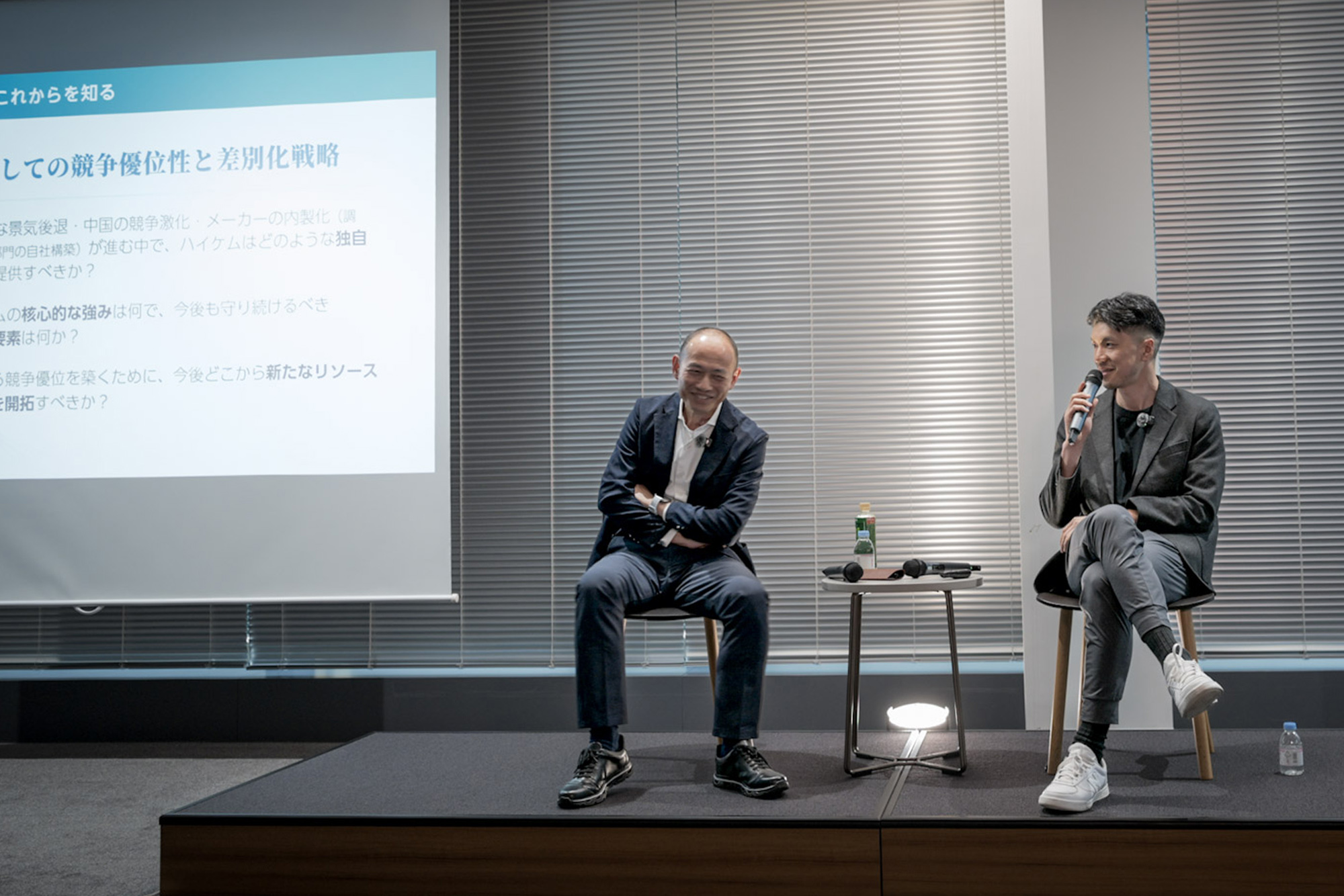
(Vice President) For the past four or five years, as the information society has continued to advance, people have often said that trading companies will no longer be necessary in the future. However, looking at the past four years, our gross profit margin has not declined at all. In fact, it has increased compared with the past.
What we need to think deeply about is “why customers continue to accept these margins.”
One major reason, in my view, is simply that “customers need us.” Why are we needed? Because we solve our customers’ problems and challenges. Our ability as a trading company to provide information, our proposal capabilities from the customer’s perspective, and our ability to respond quickly when logistics issues arise—all of these factors contribute to the value that customers see in us.
As international trade becomes increasingly fragmented in today’s environment, I believe we will continue to have many opportunities to demonstrate our value and importance.
(President) When I think about “HighChem’s core strengths,” I previously mentioned the term “bottleneck,” but...
When we expand our perspective from “trading company” and “manufacturer” to the broader relationship between “China” and “Japan,” we are dealing with two completely different ways of thinking and approaches to conducting business. They are fundamentally different, yet at the same time, they are inseparably connected. I believe HighChem deeply understands this reality at its core.
This may sound a little idealistic, but “human beings can sometimes work together in ways that seem almost impossible and accomplish something remarkable. On the other hand, there are also times when, no matter how far we go, we simply cannot fully understand each other.”
I believe that having this awareness at the organizational and corporate level is one of HighChem’s core strengths.
Geopolitical Risks and Long-Term Business Sustainability
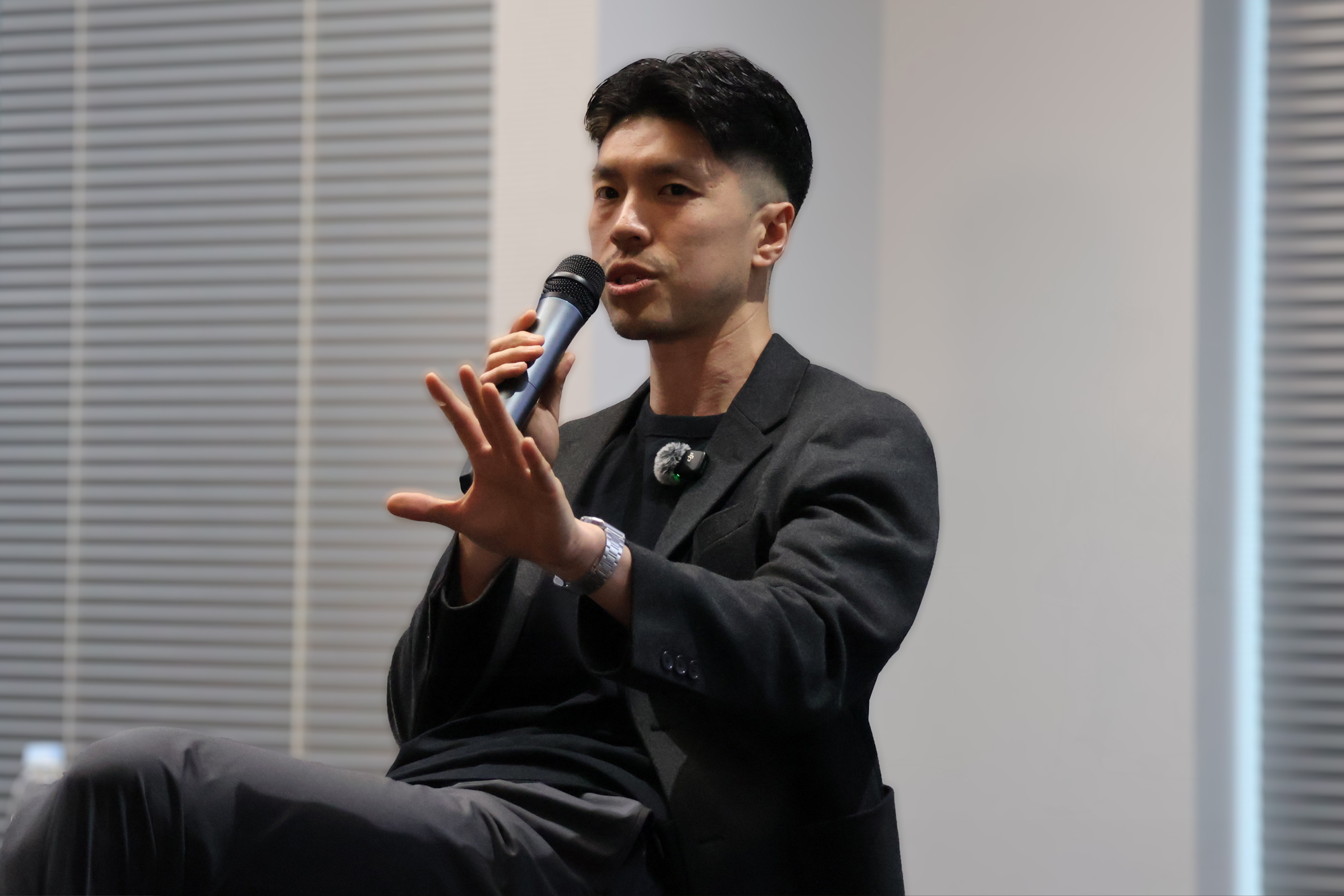
(President) As a very critical fact, the first thing we need to recognize is that the chemicals we handle are part of the infrastructure that supports daily life.
Considering the size of our company, I believe one of our strengths is that we have established a solid presence and developed businesses across almost every major field within the chemical industry. Looking back at HighChem’s performance over the past several decades, another significant strength is that even when one area faced challenges, another area continued to perform well.
Now, if tensions in the Strait of Hormuz were to escalate and affect the supply of naphtha, the impact could be significant. Since most chemicals today use petroleum-derived naphtha as a raw material, it could lead to widespread price increases and even situations where certain products can no longer be manufactured.
In particular, East Asia, including Japan, China, and South Korea, has a structure in which most chemical raw materials are highly dependent on supplies originating from the Middle East. Therefore, if a crisis such as heightened tensions in the Strait of Hormuz were to occur, it could potentially create a situation where our daily lives are at risk.
In such circumstances, I believe the technologies that HighChem has continuously researched and developed over the years will become increasingly valuable. These include “C1 technology,” which produces chemicals from synthesis gas, and “biotechnology,” which produces chemicals using resources such as PLA (polylactic acid) and biomass as raw materials.
Without such extraordinary circumstances, terms like decarbonization and carbon neutrality may sound appealing, but many people might think, “It costs more, so perhaps we don’t need to act immediately.” However, once these technologies are recognized as “security measures to protect people’s lives,” rather than simply environmental initiatives, I believe the social implementation of these technologies that HighChem has been working on will accelerate significantly in the future.
HighChem has established a unique position in technologies focused on “how to produce chemicals without relying on petroleum-derived resources.” I believe this represents a major opportunity for us.
Digital Transformation and the Future Vision of Our Organization
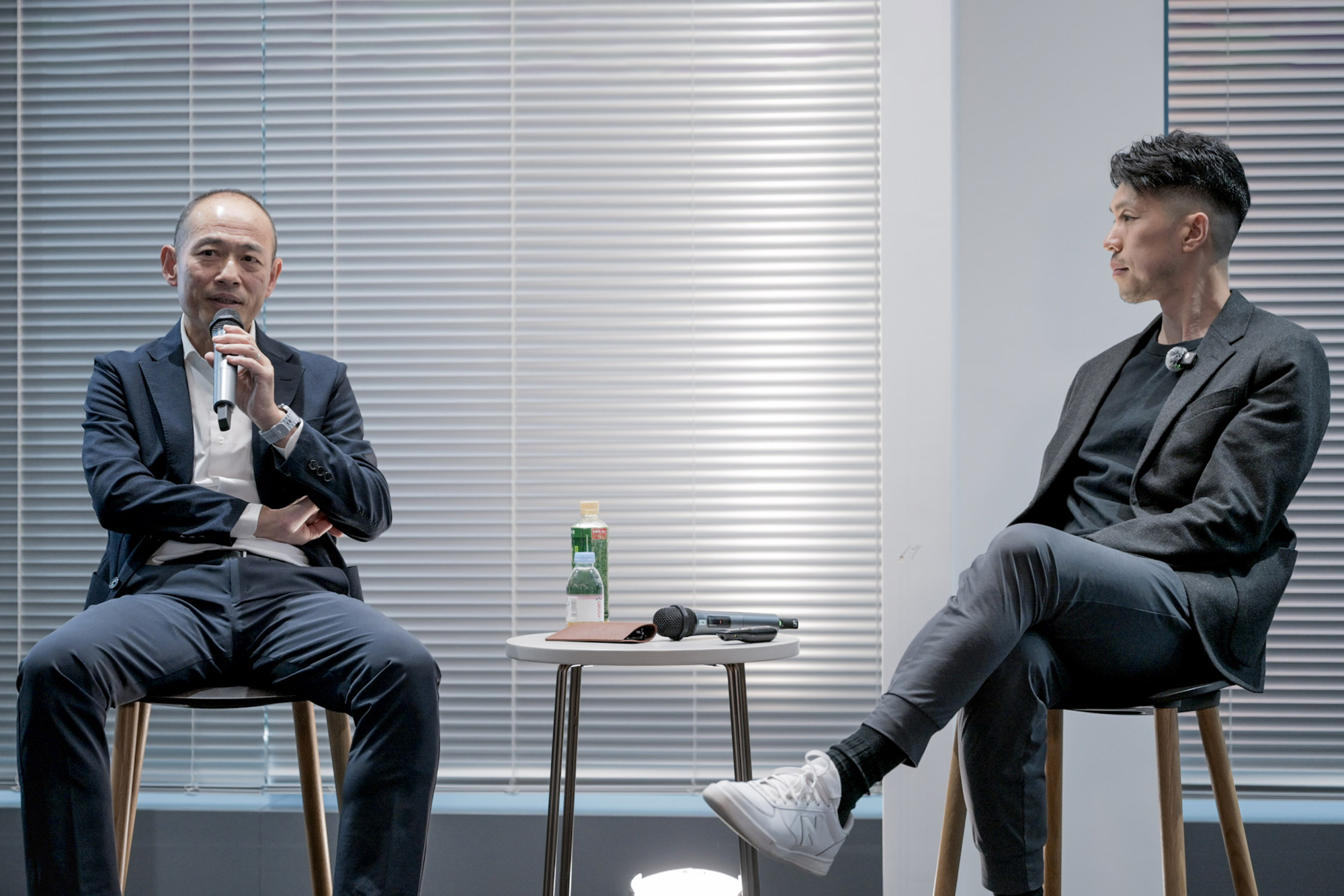
(President) I think that people’s opinions toward new technologies like these will probably become one of the dividing lines between younger generations and older generations. However, I personally view them from both perspectives.
For example, there are many jobs that disappeared with the emergence of personal computers. Therefore, it is only natural that many jobs will also disappear with the rise of AI.
As is often discussed, abilities that require intellectual skills, or a high IQ, such as organizing information and creating well-structured documents, will probably become much less necessary in the future. At the same time, however, I believe that relationships between people—in other words, the “real” human experience—will become even more valuable.
Ultimately, I believe that human beings are only truly interested in other human beings. People only pay for what comes from other people.
When it comes to your sales activities, I think it is perfectly fine to use AI to help with preparation and various tasks. However, in the end, I want everyone to demonstrate their “human capabilities,” in other words, their “human strength.”
That is why, when I set the ¥1 trillion goal, I told everyone that I wanted them to embrace qualities such as:
“Having courage”
“Being patient”
“Being tolerant”
These are qualities that AI cannot replicate. If not only individuals, but also the company as a whole, can develop a culture rooted in these values, I believe we will become a company that continues to be highly valued over the medium and long term and can sustain our business growth into the future.
(Vice President) To begin with, I am actually not very good with machines and technology. I hardly want to use computers either. (Laughs.) I am not particularly fond of technological advancement itself.
However, when it comes to AI this time, I do believe it has tremendous potential to improve productivity. The interpretation and translation work that has always been a challenge for us is a good example. When I first joined the company, I sometimes had assignments like translating an entire book within two days, and I often stayed up all night to complete such tasks. Today, AI can accomplish that work almost instantly.
There is also quite a lot of inefficiency in daily operations. I think it is extremely beneficial that AI can free employees from routine tasks that have consumed significant amounts of time, especially in areas such as logistics.
Therefore, we should actively introduce AI in these areas. Having observed many other companies, I feel that HighChem is actually quite proactive when it comes to adopting new technologies like these. We do not reject them outright. That is why I personally do not want to oppose them without first trying them myself—I believe we should first use and experience these technologies firsthand.
Developing Next-Generation Talent and Global Strategies
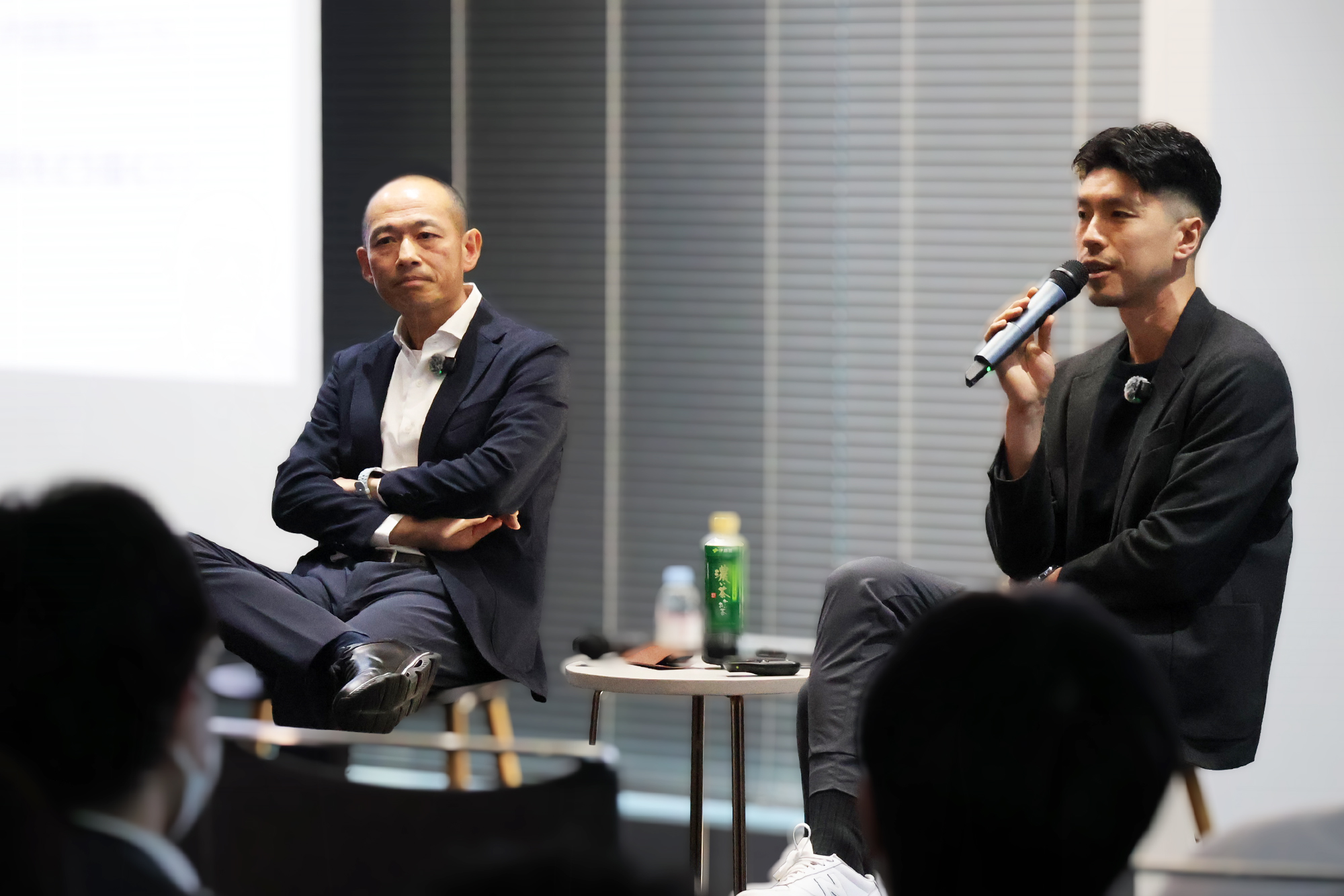
(Vice President) What I value most is, above all, people who are willing to take on challenges. I believe it is important to have the courage to face new things without fear. People with this kind of proactive mindset are the most important.
When it comes to globalization, compared with other companies with ¥1 trillion in revenue, our globalization is still very much in its early stages. Currently, China and Japan account for more than 90% of our business. Even so, I believe we must continue making efforts and taking action. We need to expand the driving force that is our greatest resource—China’s capabilities—into markets around the world.
We have built a strong position where we can access both the Chinese market and Western markets. From this perspective as well, even if results do not come immediately, I believe that if we continue challenging ourselves without giving up, those efforts will eventually lead to success.
(President) When we talk about HighChem’s globalization, it is of course not about making globalization itself the goal.
Japan is a country with significant scale, diverse resources, and advanced technologies. China is the same, and as a neighboring country with some of the world’s leading resources and technologies, the fundamental idea behind HighChem’s approach to globalization is “how to combine the strengths of these two countries and expand them to the world.”
From this perspective, what global talent at HighChem needs first and foremost is “an understanding of Japan and China.” People who truly understand the strengths of Japan and the strengths of China, and who can bring those strengths together—that is what I believe is most important.
I believe that the value of “We are the BRIDGE” embodies all of this. However, being a bridge is by no means easy. If we truly want to fulfill this role, I hope everyone will first develop qualities such as “courage,” “perseverance,” and “an open and tolerant mindset.”
後編では、1兆円企業を目指すうえでの課題や、商社とメーカー、日本と中国という二つの強みを掛け合わせるハイケムならではの競争力、そして次世代人材に求められる姿勢について語られました。
「We are the BRIDGE」という言葉に込められたように、異なる価値観や市場、技術をつなぎ、新たな価値を生み出していくこと。今回の鼎談は、これからのハイケムが目指す姿を改めて共有する機会となりました。
「We are the BRIDGE」という言葉に込められたように、異なる価値観や市場、技術をつなぎ、新たな価値を生み出していくこと。今回の鼎談は、これからのハイケムが目指す姿を改めて共有する機会となりました。