Generation Bridge, Part 2: Shared Values, Continued Challenges
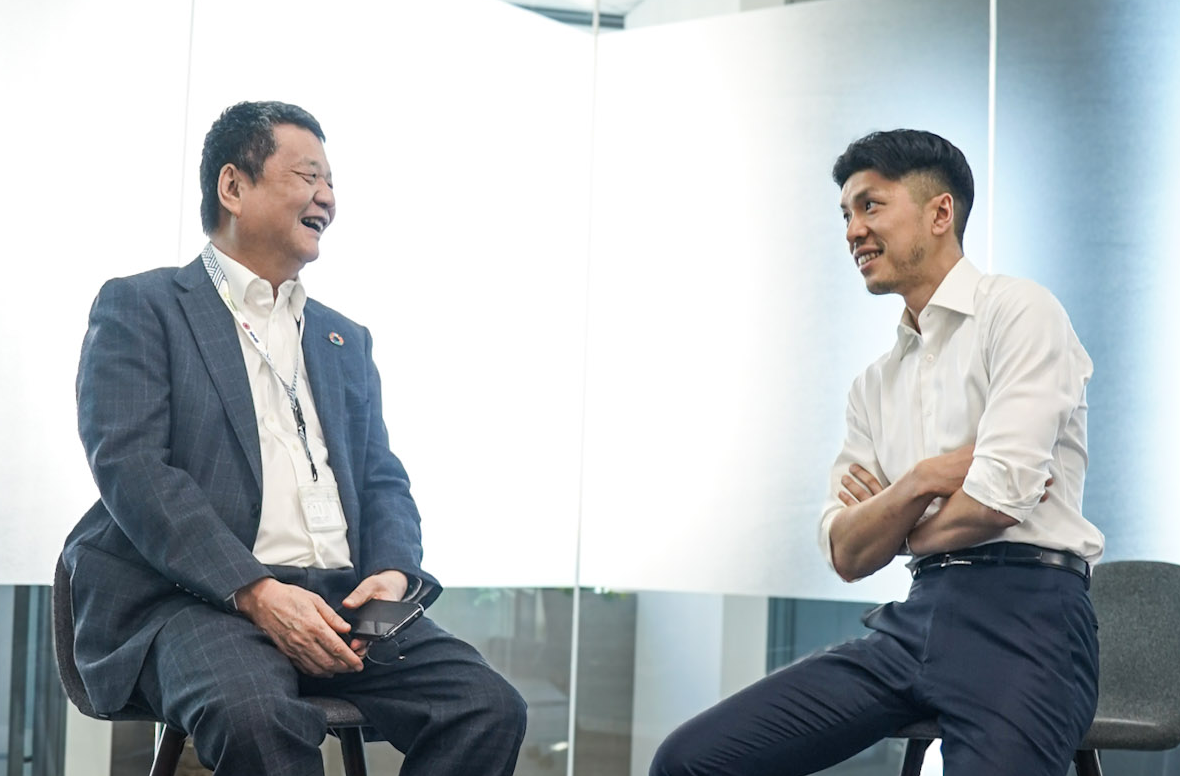
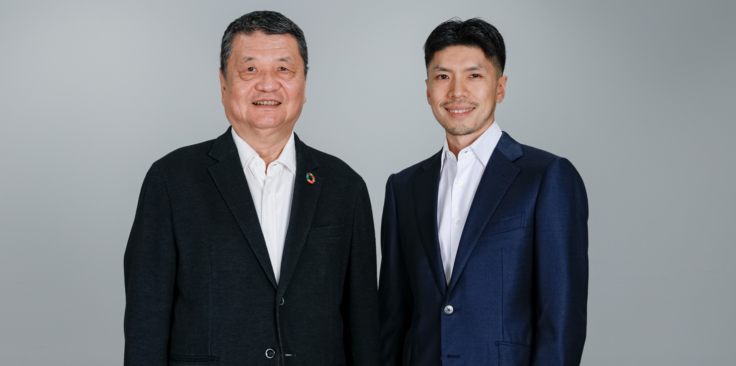
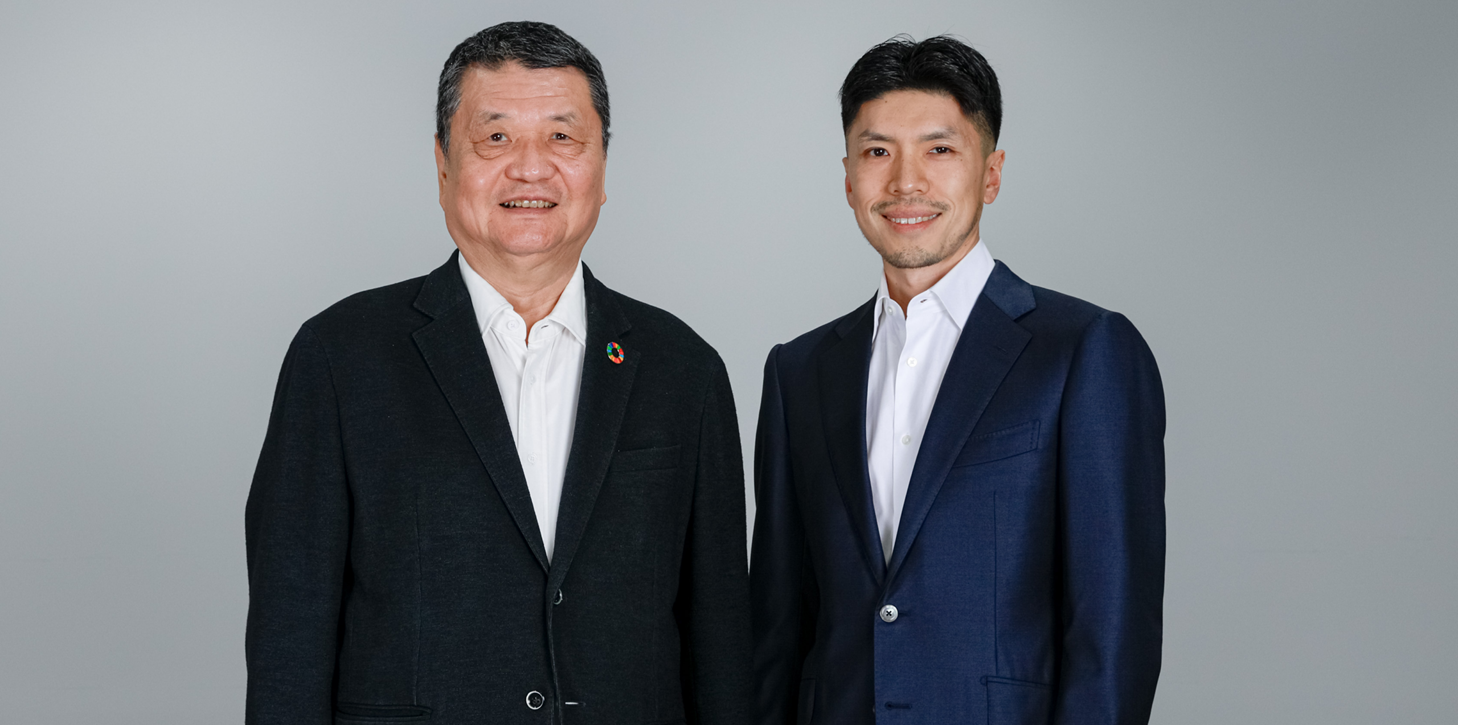
As the baton passes from our founder, Chairman Ushio Taka, to the new President, Yuichi Taka, our "HighChem Story" series presents a special feature: "BRIDGE TO THE FUTURE: A Legacy Spanning Generations."
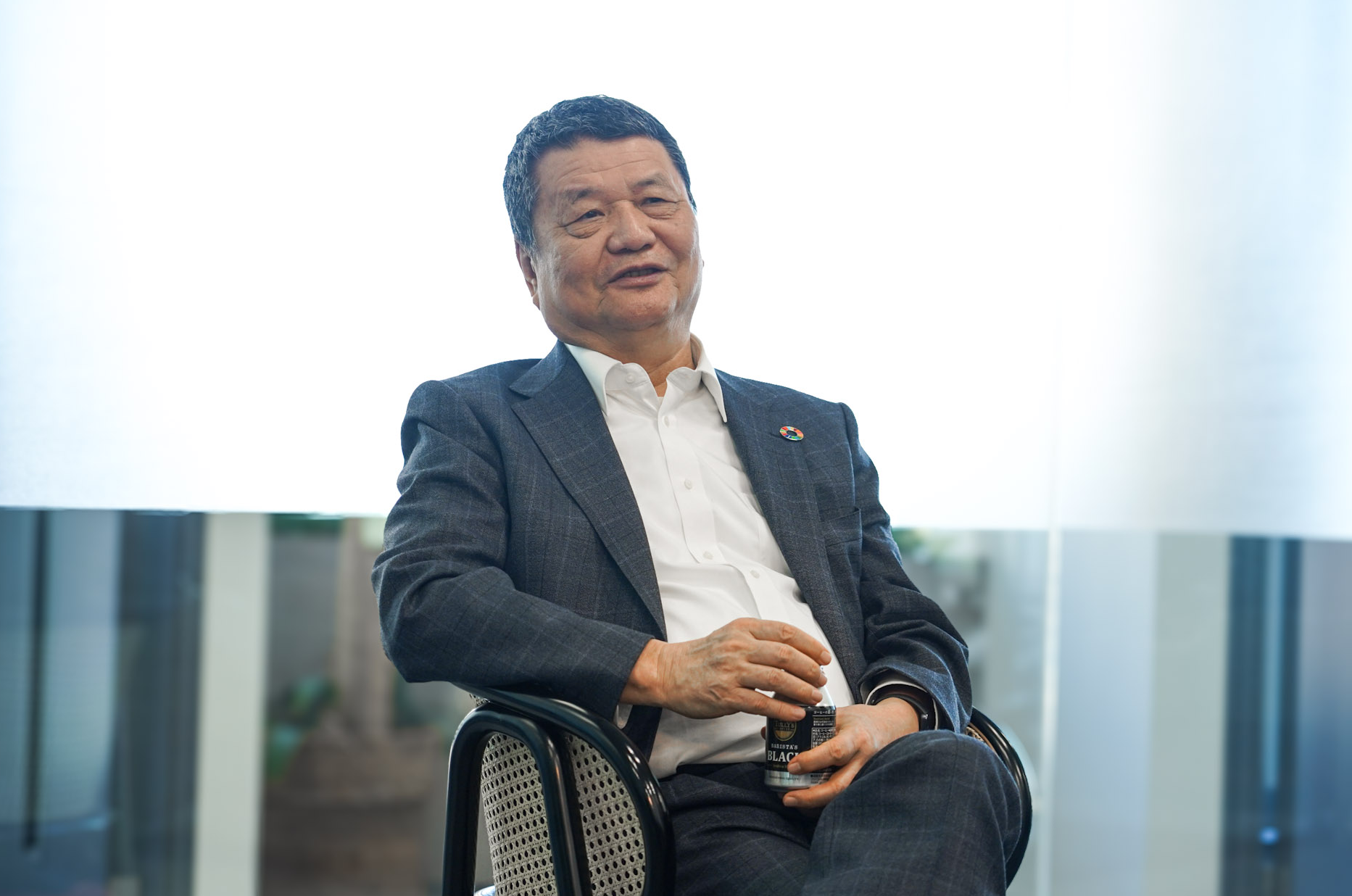
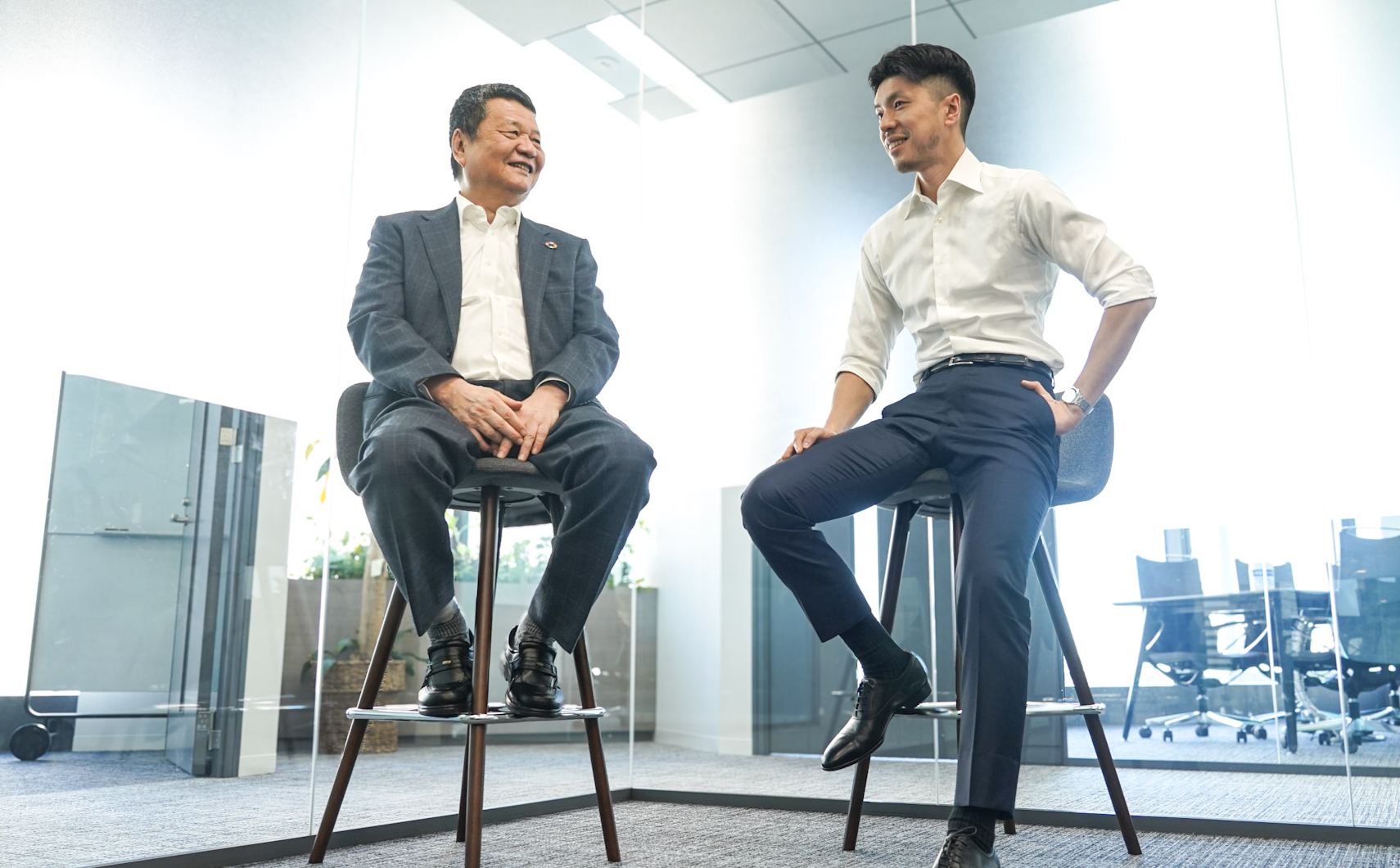
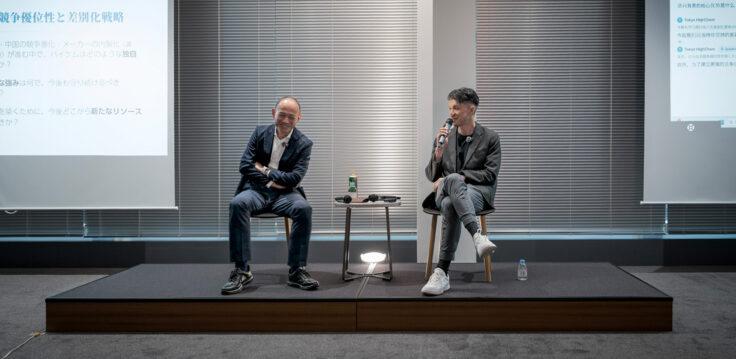
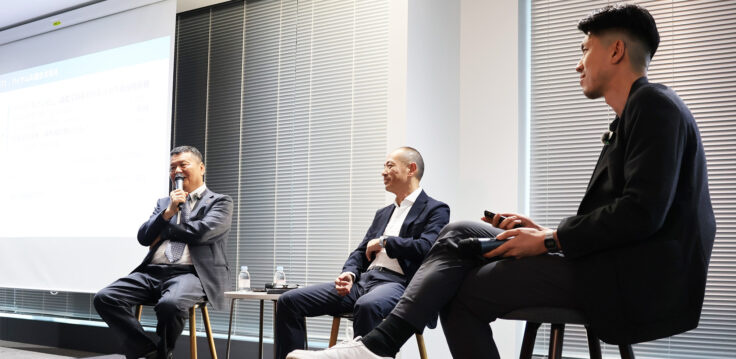
For this second installment, titled "Generation Bridge: Shared Values, Continued Challenges," we hosted a father-son dialogue. We gathered questions from our employees—primarily those in the early and mid-stages of their careers—to dive into the heart of HighChem’s future. To capture the authentic energy of the day, we have presented this as a lively, conversational piece.
Shared Values: Where the Duo Align (and Differ)

What similarities do you see in each other’s personalities or ways of thinking?
(Chairman)We aren’t actually that similar! (Laughs). But if I had to say one thing, it’s the way we think deeply. When I watch him, he thinks, rethinks, and analyzes things to the very end. That thoroughness is something we definitely share.
(President)Also, our future-oriented mindset. Neither of us tends to dwell much on the past.
(Chairman) I believe people fall into three categories: those who live in the past, those in the present, and those who look toward the future. We both belong to the third group. We believe that no matter how tough today is, things will inevitably get better—that tomorrow is guaranteed to be brighter. Even in management, Yuichi truly believes the company will keep growing, and he seems to enjoy that process. In that sense, we see eye-to-eye.
In managing his company, he firmly believes that "the company will continue to grow," and he seems to enjoy that growth. I think he and I truly share the same perspective in this respect.
Was having this shared future-oriented outlook important for the business succession?
(Chairman) Absolutely. Being President is a demanding job filled with constant worries. Without the excitement of what lies ahead, it would be impossible to endure.
Are there areas where your professional perspectives or values differ?
(Chairman) There are no major gaps in our core values, but our life experiences are quite different. I moved to Japan from China at the age of 32, so my background is rooted there. Yuichi, on the other hand, grew up in Japan from a young age.
(President) : Exactly. We grew up in different eras and societies, so our perception of specific events differs. However, the fundamental principles—the "big picture" thinking—remain the same.
What is your favorite part of HighChem’s corporate culture?
(Chairman) The "Challenger Spirit." There’s a deep-rooted belief here that we can do anything and that we should try everything.
(President) I agree. I’d also add our resilience—we are very strong in a crisis.
Connecting Generations: Thoughts on the Succession

How did you feel when your appointment as President was finalized?
(President) It was officially decided at the Group Board of Directors meeting last August. In that moment, what made me happiest was the fact that the other directors supported the decision.
That said, the Chairman had been dropping hints since the early days of our predecessor company, 21st Century Trading, saying things like, "If you ever take over one day..." so it wasn't something I had to suddenly wrap my head around.
Chairman, have you discussed succession with your family since the President was a child?
(Chairman)In the beginning, I was just desperate to keep the company afloat. Back then, if I talked about it, it was more about my desire to build a company solid enough that my son could inherit it if he wanted to. As we grew and took on social responsibilities toward our employees and partners, I had to think realistically about who would take the next baton.
Today, we have nearly 700 employees, and eventually, we will exceed 1,000. The President is responsible for those families, too. I’ve always thought about how to ensure the company's long-term stability. Since we are not a listed company, I felt that having a family member succeed me would be most easily accepted in Japanese society. I think Yuichi sensed that from a young age.
What specific changes will occur under the new system?
(Chairman) I don't think things will change suddenly. As long as the company continues, there will inevitably be a generational shift. I suppose this will be an opportunity for me to leave the day-to-day presidential duties to him, and I'll be in charge of the final touches.
Actually, being a CEO involves a lot of things that have to be done, including some that are a hassle. Like meetings that you absolutely have to attend (laughs). I think that by leaving those things to him, I'll be able to dedicate more time to my work in China.
(President) That's right. In terms of internal operations, I don't think there will be any major changes.
From an external standpoint, I intend to use this new position as president as an opportunity to visit our customers in person and listen to their feedback directly. Of course, this is based on the trust that our employees have built, but given the current strained relations between Japan and China, I believe that my direct visits, given my deeper understanding of Japanese culture and business practices, will be a good opportunity to reaffirm that "HighChem understands Japan very well."
The Path to 1 Trillion Yen: Talent Development and New Frontiers

What is the key to achieving HighChem’s goal of 1 trillion yen in sales?
(Chairman) I don’t think reaching 1 trillion yen is that difficult. HighChem has many "seeds" for interesting projects. If we sow these seeds and improve our execution, we will hit that target in a decade or so.
The real challenge is how to maintain that success and continue growing afterward. For that, "human growth" is essential. We must nurture young talent within the company. This is where I have great expectations for Yuichi.
(President) I agree. Historically, HighChem has valued people who find their own work and grow independently. But we also need to foster those who flourish with guidance. I want to build a system that develops a wider variety of talent—valuing both the fast-movers and those who have the patience to let a project reach its full potential.
What areas will become more important as the company scales?
(President) Last year, when a large number of young Chinese employees joined our Tokyo headquarters, I strongly felt that the motivations and reasons for young people coming to Japan have changed considerably compared to a while ago.
Many young people who came to Japan from China in the past had a strong motivation to "seize opportunities in Japan and make a name for themselves," and I believe that HighChem grew significantly thanks to the driving force of such young people.
However, recently, a growing number of young people, tired of the competition in China, are choosing to study in Japan, preferring a slower, less competitive environment. This mindset is completely different from the culture that has driven the growth of HighChem up until now.
When it comes to young people of this generation, we shouldn't just tell them stories of past hardships, but rather share our experiences about what the source of this company's competitiveness and growth potential is, and what it takes to succeed in the workplace.
However, I can understand why young people today might rebel if they're simply bombarded with stories of hardship and experiences and told, "This is how you have to do it." So, I think it would be good if people of our generation, in our mid-30s to early 40s, who understand both sides, could act as a filter to help the message get across to the younger generation. I believe we need to build a "Generation Bridge" within the company. Human resources are the very essence of a company's competitiveness. Looking at the atmosphere of last year's new employees, I think it's a little worrying (laughs).
I feel that the new technologies that HighChem has been working on so far, such as Biodegradable Materials and redox flow batteries*, are now in the transition stage from research and development to social implementation.
Please tell us about your future strategies and thoughts regarding new technologies.
(President) We are currently trying to position ourselves as a manufacturer of redox flow batteries, but ultimately the most difficult thing about product development is whether there is a real market need for it.
No matter how good the results of research may be, there's absolutely no point in working hard to develop something that customers don't need.
Therefore, I believe that understanding customer needs, which has always been a strength of HighChem 's culture, is crucial here as well. Even as a manufacturer, I feel that we must establish a system to grasp the core issues—the "real challenges of customer decision-makers" who are closest to the market—what they are worried about and what they want.
(Chairman) With Biodegradable Materials we're seeing promising directions such as the social implementation of High molecular weight PLA * and SC-PLA* in China, which is exciting.
(President) That's right. In this field as well, there's a gap between those developing technology and the needs of the market. The market understands the merits of new things, but they don't want to pay a high price for them. In order to spread good technology, we must consider how to reduce the cost of that new technology to the point where it can stand shoulder to shoulder with existing technologies. And if we consider how to do that, I think we have to manufacture it in a country that can mass-produce and reduce costs, which ultimately means it has to be made in China. HighChem will play a role in bridging that gap going forward.
*Redox flow battery: A next-generation rechargeable battery. At HighChem, product development is carried out at the Battery Materials Research Institute.
* High molecular weight PLA: polylactic acid (PLA) with a weight-average molecular weight of 300,000 or more.
*SC-PLA: Stereocomplex PLA. polylactic acid (PLA) with high heat resistance and durability.
The past 30 years have been a period of rapid economic growth in China, and our company has grown along with it. However, it is now said that the Chinese economy is on a downward trend. In this environment, what do you think we should do?
(Chairman) That's precisely where there will be an abundance of opportunities. The same things that happened in Japan 30 years ago are happening in China, and this is exactly what we experienced and felt as part of the atmosphere of daily life in Japan. We need to think carefully about how to apply this experience to China and find opportunities.
When the economy is growing dramatically, there is an abundance of demand, so products can be made cheaply and sold. Until now, China didn't really need Japan's know-how and experience in finding market needs and selling products even in low-growth and deflationary environments. But from now on, it will be necessary. That's why I think there are more opportunities for us from now on.
Up until now, HighChem has always found opportunities to grow during times of crisis. I believe it will continue to be the same, and it will depend on how we can delve deeper into our areas of expertise and identify important themes.
(President) I believe the structure of the Chinese economy will change in the future. From real estate accounting for 30% of GDP, China is now working hard to change that and is taking on various new challenges. Also, as the chairman mentioned, I think the theme in China going forward will not be dramatic growth, but rather what kind of business to conduct within a stable society.
Since our headquarters are located in Japan, we have ample experience in understanding what kinds of products and services people seek in a stable, non-dramatic daily life and environment. Now that China's rapid economic growth has plateaued, I think it's precisely because of this that we should be actively pursuing these opportunities.
A message to the next generation: Growth and value creation.

As HighChem moves to a new stage, what are your expectations for younger and mid-career employees going forward?
(Chairman) I want them to grow quickly. I want everyone to grow quickly. Otherwise, they won't be able to keep up with the company's growth at all.
(President) In short, those who are motivated will be promoted.
As times progress and the economy becomes more prosperous, it's natural that more people will think, "It's okay to be average," but if you let your guard down, you'll be quickly overtaken by those who are motivated. As the chairman always says, a person can't become greater than they want to be.
What areas of HighChem 's future strategy do you particularly want to focus on?
(Chairman) It's about building a human resource development system.
The most important thing is for everyone to grow together as an organization. Being disorganized or having uneven growth is unacceptable. It's crucial that everyone grows together as an organization. I believe that building this system is essential for any growth strategy.
(President) That's right. Since everyone is different, the result will probably be a bit disjointed and uneven (laughs). But the point is to raise the overall level. As I mentioned earlier, the younger employees don't yet understand the way HighChem has been doing things since its founding, or rather, the source of its competitiveness.
We need to start by getting things sorted out, like how to communicate our approach to work, how we plan to develop it in the future, and how to do that smoothly through a clear channel from management.
What do you believe are the strengths and values that HighChem should not change going forward?
(Chairman) The very basics are to consider how HighChem has been able to survive until now. Since our founding, we have been able to continue growing by providing our value to our customers.
I believe the most important thing is to "find value in yourself and to continue providing that value to your customers." If you don't keep creating value, you become useless to the world.
(President) I think that's exactly what our "We are the Bridge" spirit embodies. In any era, bridges are needed to connect people, but even after they're built, they have to be bridges that people want to keep paying tolls to use (laughs).
(Chairman) When you think about it from this perspective, I think the things that cannot be changed will naturally become apparent.