Issue 1: "Leadership Bridge"
Effective January 1, 2026, HighChem will launch its new executive leadership team.
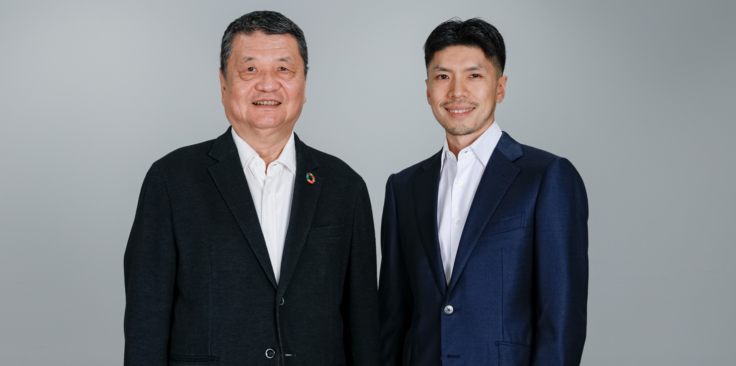
Former President and Representative Director Ushio Taka will assume the position of Chairman and Representative Director, while Yuichi Taka, who has served as Director, will be appointed President and Representative Director. In addition, Jinsong Lin, Executive Managing Director and Head of the Trading Division, will become Vice President and Director, continuing as Head of the Trading Division. This marks the start of HighChem’s new executive leadership team.
To coincide with the launch of the new leadership team, "HighChem Story" will present a serialized feature entitled "BRIDGE TO THE FUTURE: A Bridge to the Future Envisioned by the New Leadership Team." This series will include interviews and roundtable discussions with key members of the new leadership team. The first installment features a message from the new President. We invite you to read this in-depth article, which explores the new President’s character and values, the direction of the new leadership team, and specific initiatives for the future.
Former President and Representative Director Ushio Taka will assume the position of Chairman and Representative Director, while Yuichi Taka, who has served as Director, will be appointed President and Representative Director. In addition, Jinsong Lin, Executive Managing Director and Head of the Trading Division, will become Vice President and Director, continuing as Head of the Trading Division. This marks the start of HighChem’s new executive leadership team.
To coincide with the launch of the new leadership team, "HighChem Story" will present a serialized feature entitled "BRIDGE TO THE FUTURE: A Bridge to the Future Envisioned by the New Leadership Team." This series will include interviews and roundtable discussions with key members of the new leadership team. The first installment features a message from the new President. We invite you to read this in-depth article, which explores the new President’s character and values, the direction of the new leadership team, and specific initiatives for the future.
Introduction
There is a proverb in China: “The waves behind drive the waves ahead in the Yangtze River.” Literally, it means that the waves that follow push those before them onward, symbolizing the generational change from elders to youth that has taken place repeatedly throughout history. Since the dawn of human society, young people and elders have always lived together, coexisting side by side. While elders are rich in experience and wisdom but may lack physical strength, young people have energy and new ideas, though they often lack experience. Despite occasional conflicts, both have always joined hands, and it is precisely because of this cooperation that our way of life has continued unbroken to this day.
In 2026, the year I assume the role of President, I will reach the milestone age of 40. Some say, “If the working generation spans from 20 to 60, then 40 is right in the middle, making it the perfect age to understand both sides.” However, reflecting on myself, I realize that 40 is, in reality, the age most distant from either extreme. While I still retain some sense of youth, I can no longer fully grasp the fresh mindset of a 20-year-old, and from the perspective of those in their 60s, I am still inexperienced. Accepting this reality, I intend to spend my first year as President visiting as many people as possible, listening directly to a wide range of voices across ages and positions.
「We are the BRIDGE」The Spirit of HighChem
At HighChem including our predecessor 21st Century Trading Company, we have spent over 30 years connecting Japan and China—supported by both societies and many customers—through chemistry, technology, and heart.
As for myself, I was born in China and came to Japan at the age of five. Witnessing the economic gap between the two countries at that time was a profound experience. Even after acquiring Japanese citizenship, I have carried both “Japan” and “China” as parts of my identity, and at times, it felt as though these two sides were pulling me apart. However, through my childhood and high school years in Japan, my university life in China, and then my professional career back in Japan, I have had the opportunity to interact with many people and gain a variety of experiences. Gradually, the difficulty of balancing these identities eased, and I learned the importance of understanding differences, respecting each other’s cultures and values, and thinking from another’s perspective.
This is why I see great potential in the platform that is HighChem. Of our roughly 220 employees in Japan, about 70% are originally from China. The fact that Japanese and Chinese colleagues share the same workplace every day on such a scale is possible only through the constant effort of our employees to understand one another, creating a miraculous balance. I believe this very sense of balance is the key to maximizing the value of HighChem.
Japan and China may seem close, but in many ways, they are far apart. While people may look similar, there are very few similarities in society, political systems, culture, or ways of thinking. Recently, it is also true that tensions have arisen between the two countries.
However, just as young and old have always coexisted despite their differences, the world cannot function with only one set of values or rules. Every matter has two sides, and simply stating one’s own version of what is right does not build relationships. Just as you have your opinion, so does the other party. By working through these differences together, we can reach a mutual understanding and create better outcomes for all. I believe this is the attitude demanded in our times. Especially today, while our minds are free to hold individual values, our economies are intricately connected. In this complex era, we must strive for mutual prosperity and coexistence.
Since its founding, HighChem has grown by identifying various gaps between Japan and China and serving as a bridge to connect them. Because of this, we are uniquely positioned to build bridges in today’s world. Not limited to Japan and China, we will continue to stand between different interests and perspectives, facilitating agreement and compromise to achieve better results. In other words, our mission is to remain a bridge that people can cross with confidence. This, I believe, is the true purpose and mission of HighChem in society.
"All for 1 for All" The path to becoming a trillion-yen company
We are working towards becoming a one-trillion-yen company under the banner of “All for One for All.” As we aim for long-term and sustainable growth, we always keep in mind the importance of “promoting businesses that have social value.” It is precisely because our businesses have social significance and value that we can achieve continuous development together with all of you. At HighChem, we are confident that we have two major pillars—two possibilities—that enable us to create such business structures and promote businesses that are valuable to society.
First Pillar: Flexibility in the Changing Chemical Industry Structures of Japan and China
Currently, the chemical industries in both Japan and China are at a major turning point. The advancement of technology in China’s chemical industry is remarkable, and the increase in production capacity through the construction and expansion of large-scale facilities is well-known. Meanwhile, in Japan, companies are withdrawing from upstream petrochemical products due to industry restructuring, and at the same time, Japanese companies are increasingly focusing on high value-added downstream products, where they can differentiate themselves through technology and supply chain excellence. However, procuring upstream raw materials remains essential. HighChem’s ability to respond to this need is not just an economic matter, but also a significant social responsibility.
Fields such as IT and finance are often cited as examples, but no matter how much we strengthen our “soft power,” if we lose the ability to manufacture physical products, the nation's actual strength will rapidly decline. From a capital efficiency standpoint, manufacturing may not always be the most attractive industry, but supporting technological innovation and production capacity—fundamental to economic growth—and maintaining and developing manufacturing capabilities in Japan are vital missions for HighChem. We are committed to supplying necessary raw materials with high quality and stability. In particular, for the three fields in high social demand in both Japan and China—health, digital, and environment—we are operating under the slogan “HDS,” which stands for Health, DX (Digital Transformation), and Sustainability. In addition to expanding our trading operations, we are also enhancing our manufacturing capabilities and investing in technology and business to meet our customers’ needs.
Until now, it was common for Japanese companies to leverage their advanced technology and know-how to conduct OEM production in China. However, as China’s technological capabilities improve, we expect to see more Chinese companies engaging in OEM production in Japan in the future. If Chinese business management and operational practices are simply brought into Japan as-is, cultural and conceptual differences will likely lead to failure. By serving as a bridge and enabling win-win business relationships, we believe we can create businesses that are valued and trusted by customers in both Japan and China, as well as by society as a whole.
Second Pillar: The Potential of C1 Technology
The other major pillar is the potential of C1 technology. We believe that the essence of carbon neutrality lies not in energy but in chemicals. Although chemicals may seem unremarkable, they are the infrastructure that support every aspect of modern human society and civilization, constantly transforming and appearing in various forms in our daily lives. If, for example, fossil resources were to run out tomorrow, there would be various debates, but as an extreme measure, electricity could still be generated by nuclear power. However, there is no substitute for chemicals. Without the raw materials for everything from large items like buildings and home appliances to smaller items like clothing and detergents, the cost of living would increase far beyond tenfold. Globally, the population continues to grow, and with the rapid economic development and increasing demand in emerging and developing countries, how humanity will replace fossil resources as raw materials for chemicals is a major challenge for the future.
The key to solving these challenges and finding alternative raw materials to fossil resources lies in CO₂ and biomass, both of which contain carbon and exist abundantly in nature. The technology that converts these raw materials into chemicals is what HighChem has been dedicated to for many years—our “C1 Technology.”
In the context of reducing CO₂ emissions, HighChem uses this C1 Technology in China to manufacture ethylene glycol from off-gas generated at steel mills. Thanks to this technology, we have already achieved an annual reduction of 560,000 tons of CO₂. Additionally, in the context of CO₂ utilization, our NEDO project has focused on producing paraxylene from CO₂, which was then used to make the official uniforms for Japan’s national climbing team. Our technology for producing ethylene glycol from CO₂ has also attracted significant interest from countries and regions that are heavily dependent on fossil resources. We are currently working closely with local governments and major energy companies to conduct feasibility studies, aiming to have our first plant operational within a few years.
To further develop C1 Technology and promote a carbon-neutral society, it is essential to combine Japan’s strength in technological development with China’s capacity for scaling up. When it comes to practical implementation, HighChem —with its deep understanding of both Japanese and Chinese regulations and business practices—is uniquely positioned to play a vital role.
Even if fossil resources were to run out one day, our goal is to ensure that human society can continue its way of life without disruption. We are committed to steadily advancing the development and commercialization of our core C1 Technology.
Challenges and Ambitions: Balancing Trading and Manufacturing Functions, and Achieving Inorganic Growth
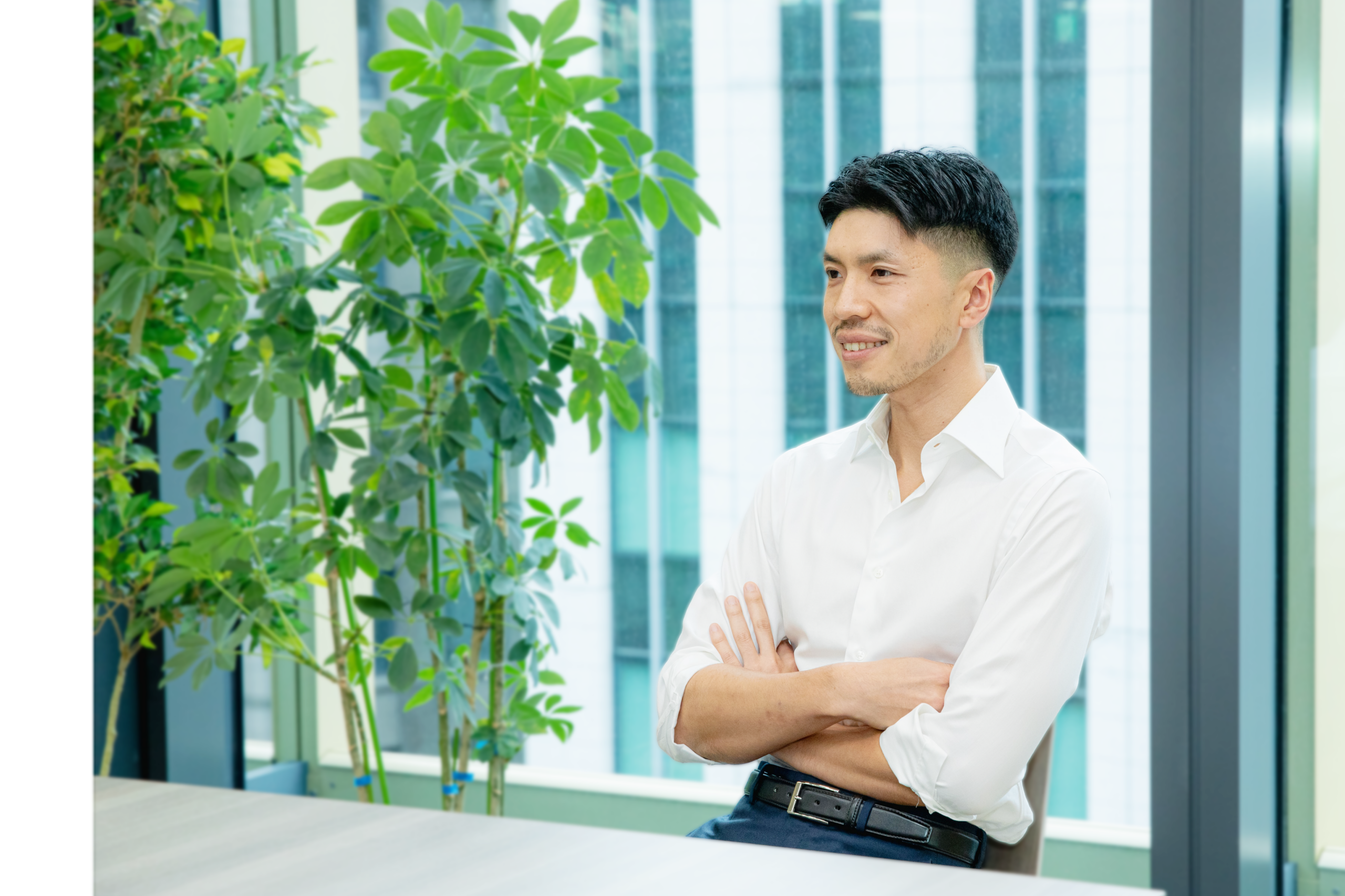
Since its founding, HighChem has grown by harnessing the power of each employee to identify and seize business opportunities, against the backdrop of China’s economic development. Our strong customer network and broad product lineup, cultivated over many years, continue to serve as the unwavering foundation of our trading business—now and into the future.
On the other hand, after the Lehman Brothers shock, we faced a major challenge: the trading business alone resulted in low gross margins and was highly susceptible to exchange rate fluctuations. At that time, President Taka Ushio realized the necessity of establishing a high-margin manufacturing function to ensure the company’s sustainable growth. In 2010, we launched the SEG® business. Thanks to the support of the market, this new initiative has produced significant results: we have signed license agreements for an annual production capacity of approximately 10 million tons and have even established a catalyst plant.
When considering the business lifecycle, I believe that the urgent task at hand is to create the second and third SEG® businesses. In recent years, I have taken the initiative to promote manufacturer-type businesses, such as the overseas expansion of the SEG® business, the development of bio-based materials, and entry into the battery sector. Through these experiences, I have realized that in order to make a manufacturing business function—that is, to succeed with a product-out approach—a different division of roles from that of a trading company is required. All functions, including research and development, manufacturing, and sales, must move in the same direction, aiming for the same profit. As I mentioned earlier, HighChem's corporate culture, which has supported our growth, is one where everyone is driven by a sense of ownership for profits. There is no doubt that this sense of ownership will remain extremely important in the future. However, while the strength of individual capabilities is one of our advantages, it can sometimes become an obstacle when the organization needs to work toward a unified goal.
Our challenge is to harness the strength of the individual while advancing together as one organization toward a common goal, allowing both the trading and manufacturing functions to coexist and generate further synergy. Striking a balance between short-term and long-term objectives as we work toward our goals is certainly difficult, but we will start by renewing our commitment to collaboration within the company and steadily making progress.
In addition to balancing these two functions, I would also like to keep in mind the option of pursuing inorganic growth through business acquisitions and M&A. As mentioned above, the chemical industries in both Japan and China are about to enter a period of major transformation. HighChem has experienced countless times that technologies and businesses which may no longer be competitive in Japan or China alone can quickly regain potential if we change our perspective on the technology, the people involved, the market, or the supply chain. This experience, this perspective, and this way of thinking are invaluable assets for HighChem.
In this era of major industrial transformation and supply chain reorganization driven by geopolitical factors, we will encounter even more opportunities. Going forward, we do not just want to serve as a bridge across supply and demand gaps. If a technology, business, or even an entire company can further increase its value by sharing the same vision as a member of the HighChem family, we want to actively seize these opportunities.
In Closing
The proverb “The waves behind drive on those ahead in the Yangtze River” holds not only the meaning that new generations constantly replace the old, but also contains another important message: “Times progress.” Even the mightiest river begins as a tiny stream or a single drop of water. As water flows, it repeats erosion and deposition, carving mountains and reshaping the very land itself. Perhaps humanity has been repeating the same things since the dawn of history, but our civilization has steadily advanced.
We created writing, cultivated fields with iron tools, transported goods with wheels, and crossed oceans with the compass. We rotated turbines with steam, soared through the skies with three-axis controlled wings, took our first steps on the moon, and connected the world with information at the speed of light. Now, we are beginning to break free from fossil resources and take on new challenges such as artificial intelligence, robotics, quantum technology, and limitless energy through nuclear fusion.
Though each individual may be small and imperfect, it is our collective strength and our ability to join hands that define humanity. History may seem like a repeating cycle for people, but humanity progresses in a spiral.
Not only in the chemical industry, but also in the relationship between Japanese and Chinese industries, we are now at a major turning point. The strengths of Japan and China are, in fact, quite different. If HighChem can bring together these strengths and turn them into power, I believe we can become an indispensable presence not only for both societies but also for this era of upheaval.
Embracing our purpose, “We are the BRIDGE,” we will continue to unite Japan and China and build as many bridges as possible to the world. I am committed to continually sharing this vision with all our stakeholders and leading HighChem’s future development.
The future will surely be better.