As efforts toward carbon neutrality accelerate worldwide, technologies that transform CO₂ from something to be “emitted” into a resource to be “utilized” are attracting increasing attention. Against this backdrop, C1 Chemistry is gaining interest as a new approach to the chemical industry.
In this article, we will explain the fundamentals of C1 Chemistry, why it is attracting attention, how it differs from petrochemicals, the main products that can be produced, and its future potential. We will also introduce HighChem’s SEG® technology and CO₂ utilization projects.
In this article, we will explain the fundamentals of C1 Chemistry, why it is attracting attention, how it differs from petrochemicals, the main products that can be produced, and its future potential. We will also introduce HighChem’s SEG® technology and CO₂ utilization projects.
What is C1 chemistry?
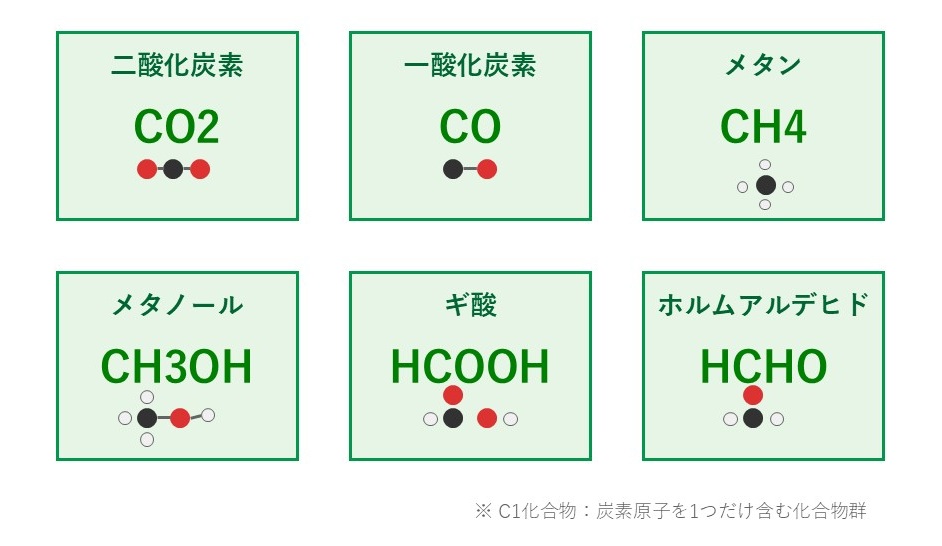
C1 chemistry is a collective term for technologies that synthesize various chemical products using compounds containing one carbon atom (C1) as raw materials. Typical C1 feedstocks include carbon monoxide (CO), carbon dioxide (CO₂), methane (CH₄), methanol (CH₃OH), and formic acid (HCOOH).
Figure 1: Molecular Structures of Major C1 Compounds
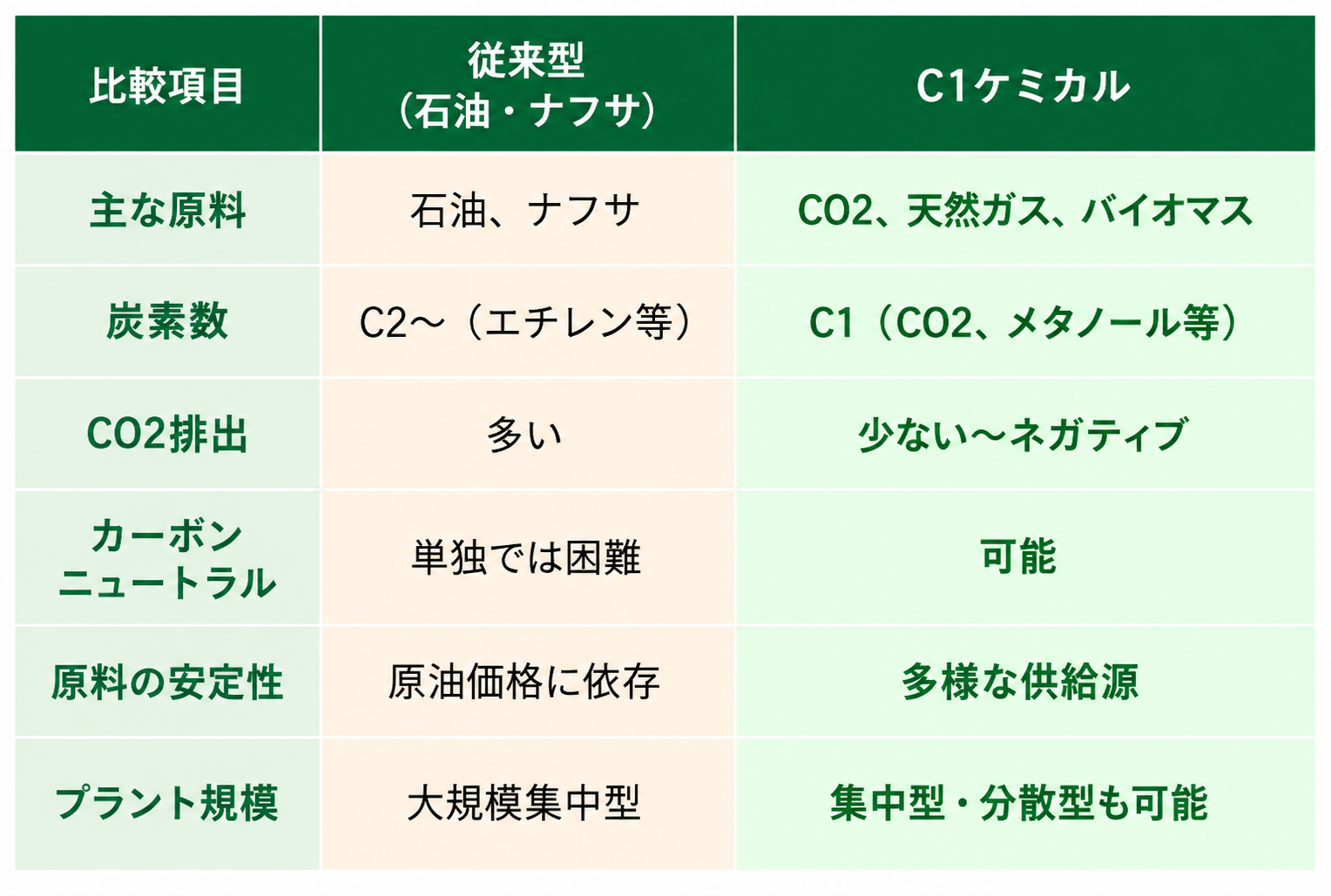
Petroleum-derived naphtha and other materials that we use in our daily lives consist of mixtures of hydrocarbons containing multiple carbon atoms. Various plastics and chemicals are produced through the conventional chemical industry using naphtha and other such feedstocks.
In contrast, C1 chemistry starts with one-carbon compounds such as CO, CO₂, methane, and methanol, with the aim of synthesizing chemical products according to specific needs.
In other words, it is a technology that uses one-carbon molecules as fundamental building blocks and converts them into the chemicals required. In this respect, it is based on a different concept from conventional petrochemicals, as it expands the range of possible raw materials.
Table 1: Comparison of Conventional Chemical Industry and C1 Chemistry
Why Is C1 Chemistry Attracting Attention?
One of the reasons C1 chemistry is attracting attention worldwide is its ability to produce chemical products from a wide variety of C1 feedstocks, including CO₂. Because CO₂ is itself a C1 feedstock, C1 chemistry opens up new possibilities for utilizing CO₂ as a resource, rather than treating it solely as something to be emitted and reduced.
As the realization of a decarbonized society becomes a global challenge, there is growing demand not only to reduce CO₂ emissions but also to promote carbon recycling, which involves capturing emitted CO₂ and reusing it as a raw material for chemical products. C1 chemistry is positioned as a technological foundation supporting this approach to carbon recycling.
Figure 2: Concept of Carbon Recycling through C1 Chemistry
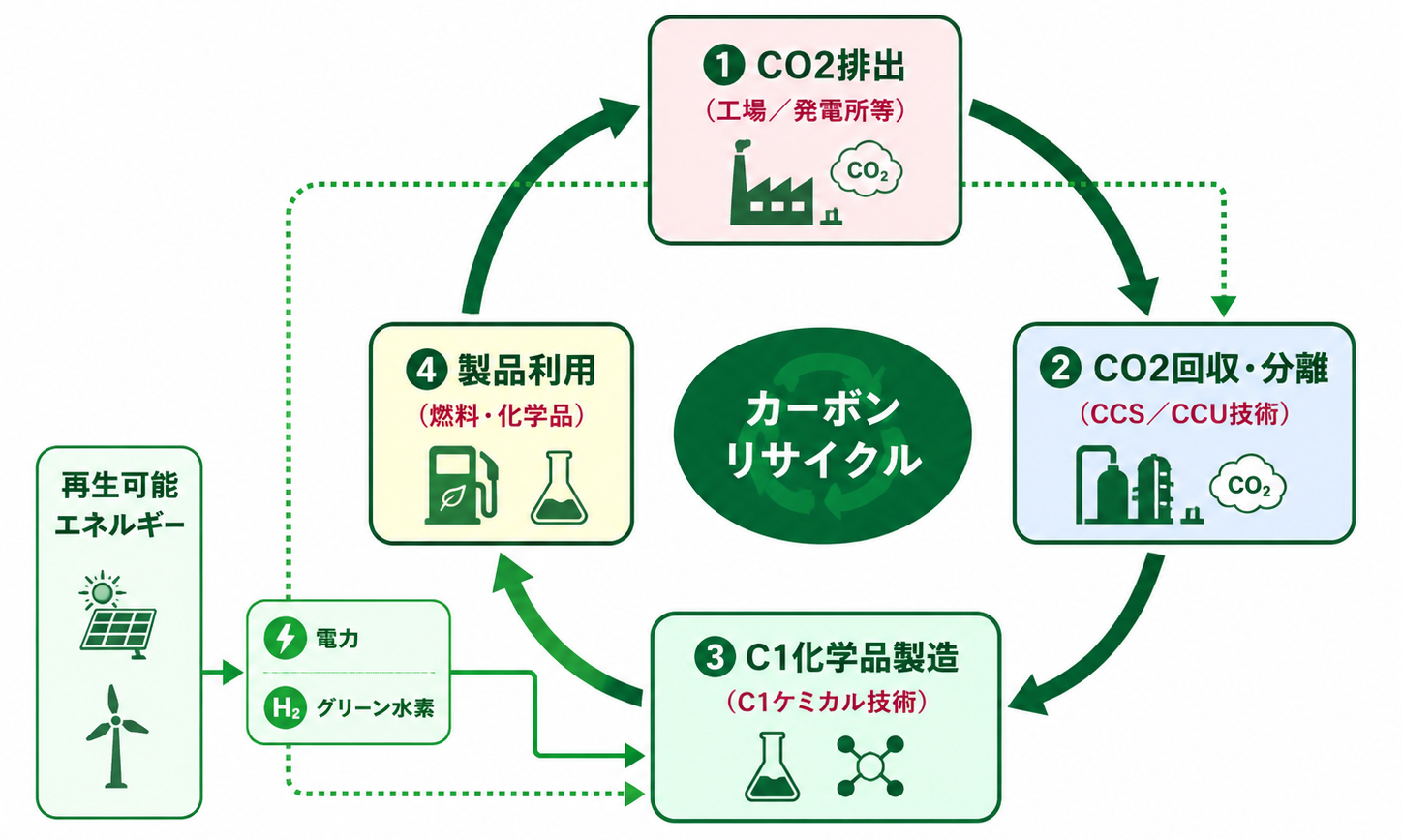
In addition, moving away from dependence on fossil resources and establishing systems capable of producing chemical products from diverse feedstocks is important from the perspectives of stable resource supply and energy security. C1 chemistry technologies can utilize a wide range of feedstocks, from coal, natural gas, and biomass to industrial off-gases and CO₂. As a result, research, development, and commercialization of these technologies are progressing worldwide as an important means of supporting the transition toward a more sustainable chemical industry.
Major Products That Can Be Produced
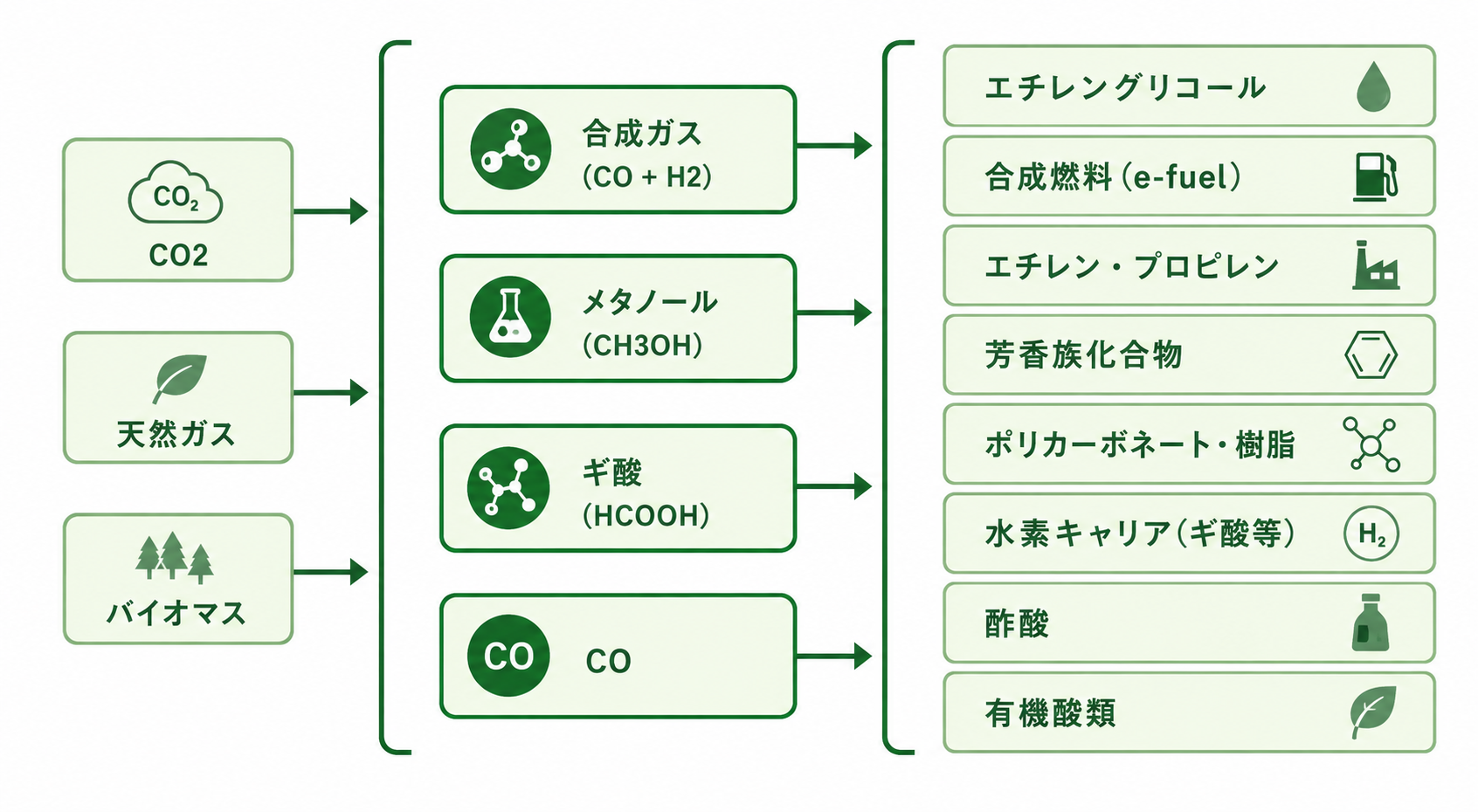
C1 chemistry technologies can be used to produce a wide range of chemical products.
Figure 3: Major Chemicals Produced from C1 Compounds
Ethylene Glycol (EG)
Ethylene glycol is a basic chemical widely used as a raw material for polyester fibers and PET bottles. It is generally produced from petroleum-derived ethylene. However, C1 chemistry technologies make it possible to produce non-petroleum-derived ethylene glycol using syngas or CO₂ as feedstocks. In China, a certain amount of ethylene glycol is already being produced from non-petroleum-derived feedstocks.
Methanol
Methanol is a versatile compound used in a wide range of applications, including as a fuel and as an intermediate for chemical products. It can be produced from syngas or CO₂, and methanol can also serve as a starting material for producing a variety of chemical products, including olefins and aromatic compounds.
Synthetic Fuels (e-fuels)
Synthetic fuels are liquid fuels produced from CO₂ and hydrogen, with applications in aviation and automotive fuels currently being researched. Because they have the potential to utilize existing fuel supply infrastructure and internal combustion engines, they are attracting attention as a promising option during the transition to a decarbonized society.
Olefins and Aromatic Compounds
Technologies are also being developed to produce olefins such as ethylene and propylene, as well as aromatic compounds such as para-xylene, via methanol.
Formic Acid, Acetic Acid, and Other Organic Acids
Organic acids that can be produced using CO₂ or CO as a carbon source are also among the products of C1 chemistry. They are used across a wide range of fields, including food additives, preservatives, and industrial applications.
HighChem’s C1 Chemistry Initiatives
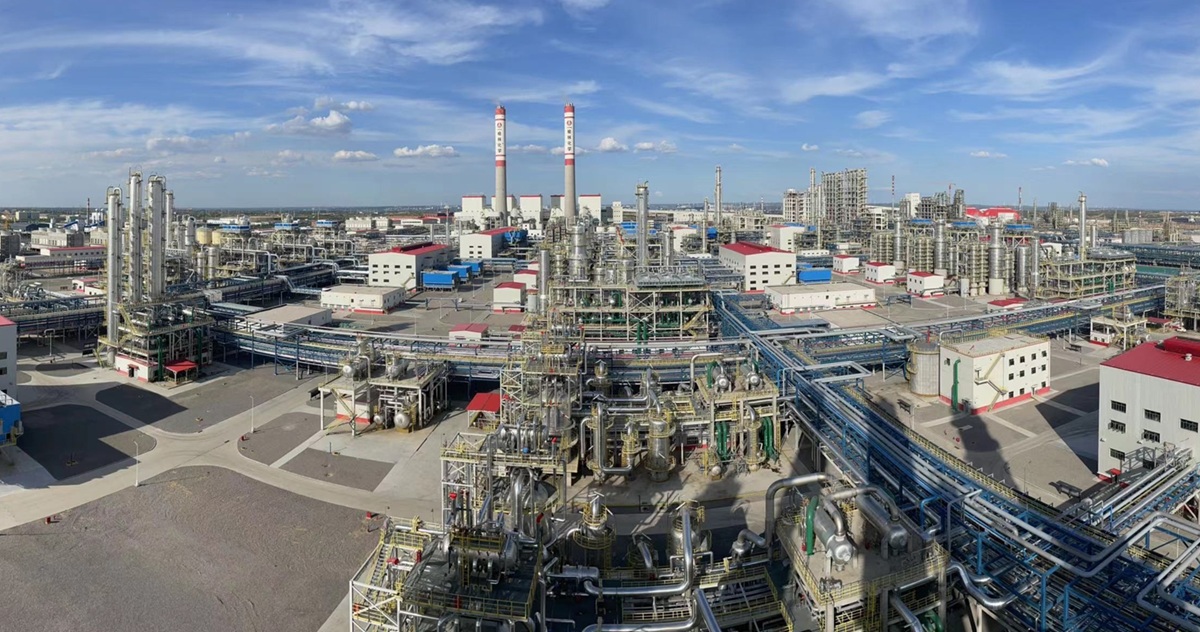
HighChem Company Limited is developing a variety of businesses based on C1 chemistry technologies.
Here, we introduce some of our key initiatives.
SEG® Licensing Business
Figure 4: HighChem’s SEG® Technology and Its Applications
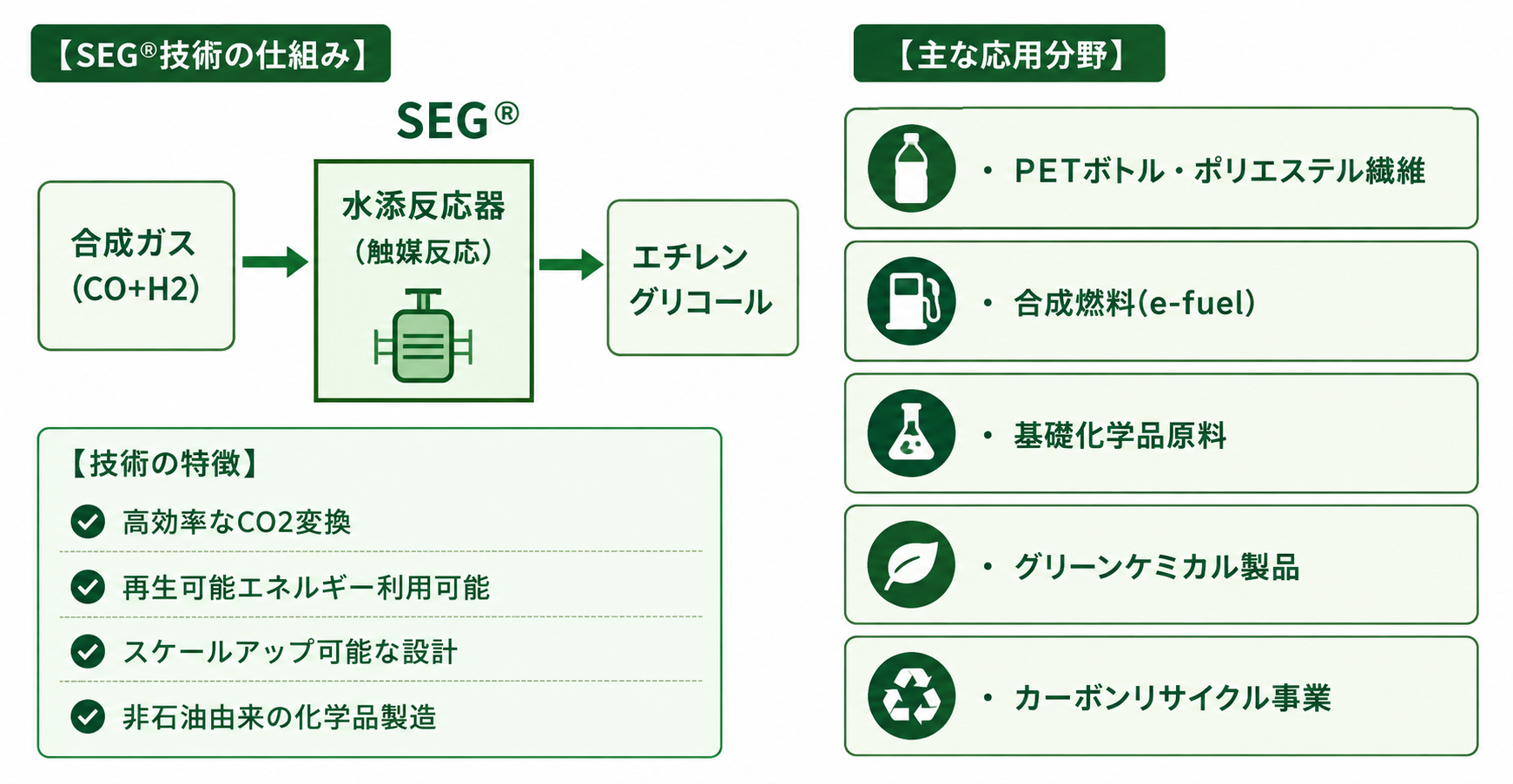
Figure 5: HighChem’s “COre Technology” Map
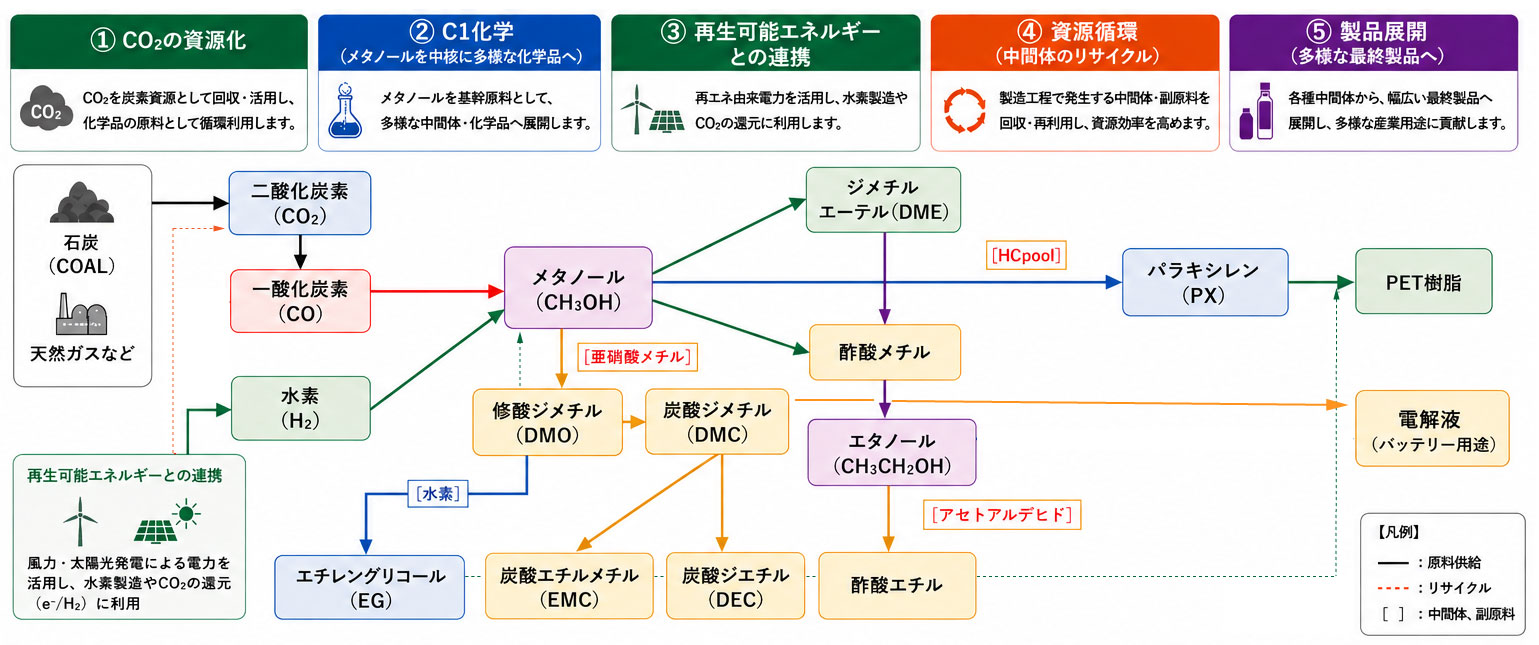
At the core of HighChem’s C1 chemistry business is the licensing of SEG® (Syngas to Ethylene Glycol) technology. SEG® technology is a non-petroleum-based process that uses syngas (carbon monoxide and hydrogen) as a feedstock to produce ethylene glycol, a raw material for polyester and PET bottles. A wide range of resources, including coal, natural gas, industrial off-gases, and biomass, can be used as feedstocks, making SEG® a non-petroleum-based production technology that enables greater feedstock diversification.
Based on technology developed by UBE Corporation, HighChem established a commercial-scale production system and has developed the technology as a licensing business. To date, HighChem has concluded 23 license agreements, with projects totaling approximately 10 million tons per year. Ethylene glycol produced using the SEG® process has grown to account for more than 30% of the market in China.
Today, HighChem is combining Japanese and Chinese technologies to promote global expansion into Southeast Asia and the Middle East. In Sarawak, Malaysia, for example, HighChem has signed an MOU for the development of a plant utilizing SEG® technology, advancing the commercialization of the technology on a global scale.
Development of CO₂-Derived Green MEG
Building on SEG® technology, HighChem is also developing technology to produce ethylene glycol from CO₂ as a feedstock. We are currently strengthening our efforts toward commercialization, with the goal of eventually achieving production costs competitive with commercially available ethylene glycol. If realized, this technology would enable everyday products such as polyester fibers and PET bottles to be manufactured using CO₂-derived raw materials, potentially contributing to the decarbonization of the chemical industry as a whole.
NEDO Project

HighChem is also participating in the development of technology to produce para-xylene from CO₂. Para-xylene is a raw material for purified terephthalic acid (PTA), a key raw material for PET resin. If this technology is commercialized, para-xylene, the raw material for PTA, could be produced from CO₂ in addition to ethylene glycol, potentially contributing to further reductions in the carbon footprint of PET products.
This project is a national project jointly developed with companies and universities and selected by NEDO (New Energy and Industrial Technology Development Organization). HighChem is responsible for catalyst development and catalyst scale-up development.
In 2023, the project’s pilot plant achieved the world’s first successful isolation of CO₂-derived para-xylene. In 2024, a Japanese national team uniform for sport climbing incorporating a portion of this material was actually produced. Development is progressing toward commercialization around 2030.
For Those Interested in C1 Chemistry

In this article, we have explained the fundamentals of C1 chemistry, why it is attracting attention, how it differs from petrochemicals, and HighChem’s initiatives. C1 chemistry, which enables CO₂ to be utilized as a resource, is attracting worldwide attention as a next-generation technology for achieving carbon neutrality, offering an alternative to the conventional petroleum- and naphtha-based chemical industry. Furthermore, the concept of a circular economy, in which waste is treated as a resource, has the potential to transform the very structure of the chemical industry.
Figure 6: Overview of HighChem’s Carbon Design Business
<Initiatives to design and commercialize businesses based on decarbonization and resource circulation, encompassing products, processes, supply chains, and systems for collection and reuse>
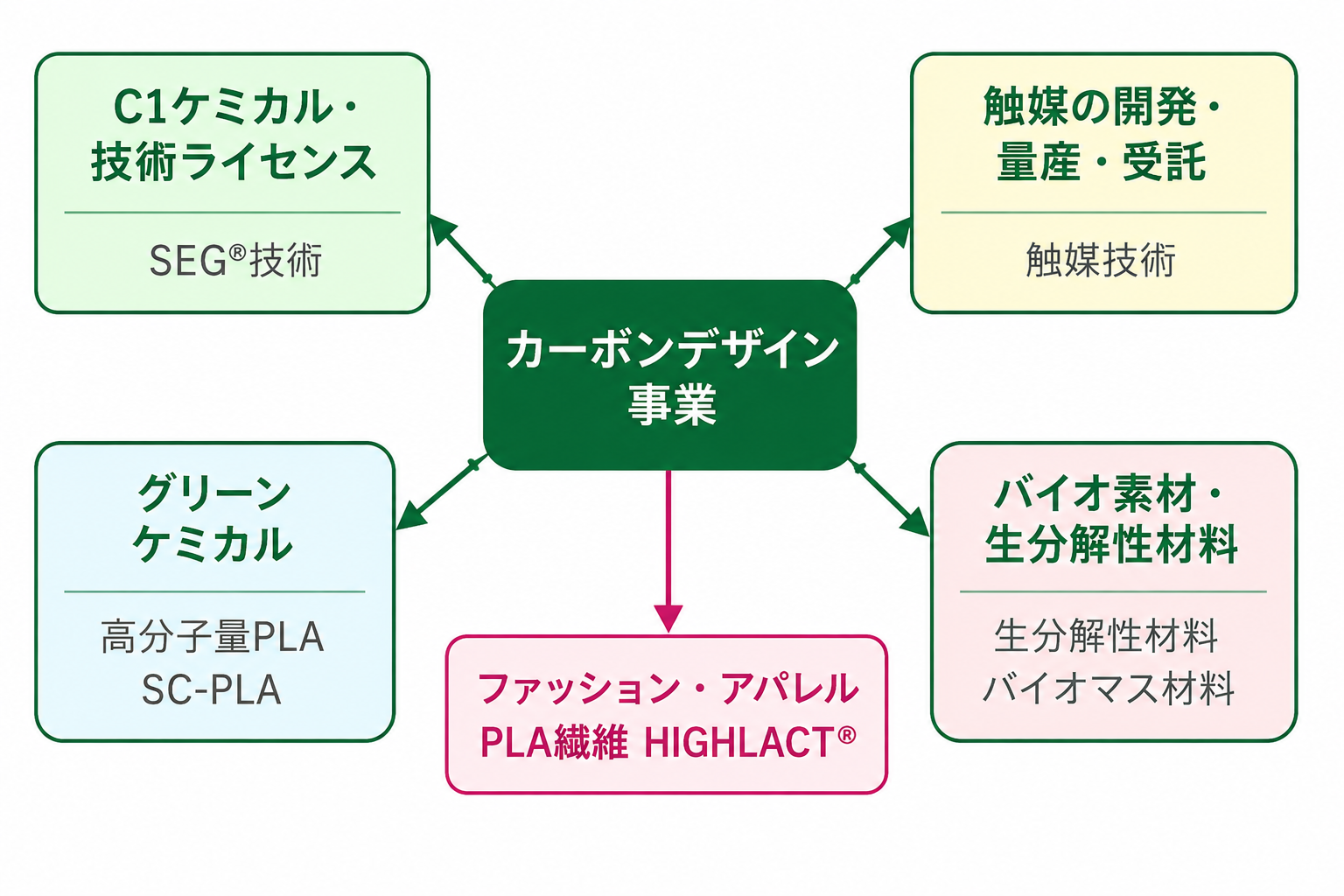
HighChem’s Strengths
HighChem is advancing its C1 chemistry business by leveraging the following strengths.
1. Proven Track Record (China): As of 2026, 23 SEG® licensing agreements and projects totaling approximately 10 million tons per year
2. Technological Expertise: Proprietary catalyst technologies and scale-up expertise
3. Global Network: Integration of Japanese and Chinese technologies, with expansion into Southeast Asia and the Middle East
4. Comprehensive Solutions: From technology licensing and catalyst supply to plant operation support
HighChem is advancing its C1 chemistry business by leveraging the following strengths.
1. Proven Track Record (China): As of 2026, 23 SEG® licensing agreements and projects totaling approximately 10 million tons per year
2. Technological Expertise: Proprietary catalyst technologies and scale-up expertise
3. Global Network: Integration of Japanese and Chinese technologies, with expansion into Southeast Asia and the Middle East
4. Comprehensive Solutions: From technology licensing and catalyst supply to plant operation support
HighChem is advancing the development and commercialization of technologies for producing CO₂-derived ethylene glycol and para-xylene, as well as its SEG® licensing business. If you are interested in C1 chemistry, please feel free to contact HighChem.